Tag Archive for: customer management expert

brand3

The definition of our brand, when boiled down to its simplest form, is what our customers and prospective customers think and feel about our service and our organizations.  We all have a brand.  The question is, did we choose it, or did we let others choose it for us?

Red Cape Right SideOur Brand Promises a Certain Customer Experience

We communicate our brand through every customer touch point, including through our websites, promotional materials and our written proposals for example. Our brand promises a certain customer experience.  The delivery of our brand promise comes through the interaction between our field service team and our customers.  It is critical that our field team acts and communicates in a way that is consistent with our brand and its promise because those interactions are our customer’s reality.

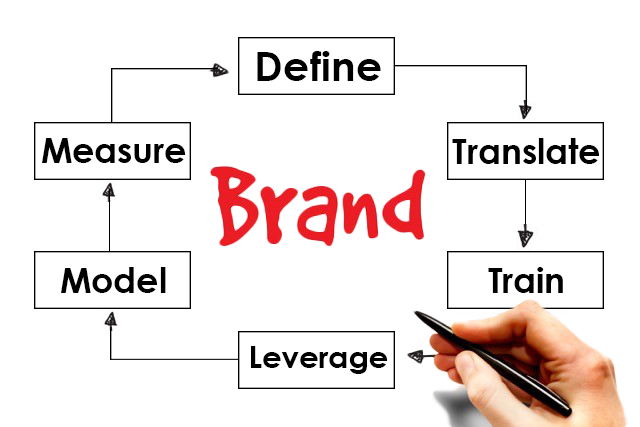
Here are six steps you can take to ensure that your field service representatives deliver your brand promise.

1. Define – Define your brand

By clearly articulating your brand and your brand promise, you can set the foundation to guide your technicians’ actions so that they are consistent with your brand promise.  Start by answering these three questions:

  • How do you want others to think about you?
  • How do you want others to feel about you?
  • What do you want others to say about you?

For example, a service organization that wishes to build their brand promise around the proactive efforts of their field service team may define their brand as follows:

  • How we want others to think about us:Our service provider does more than simply keeping our equipment/facilities/processes running well, they take steps to help us achieve our business goals.”
  • How we want others to feel about us: “We feel assured / We are in good hands”
  • What we want other to say about us: We are better off for having engaged our service provider.”

2. Translate – Translate the brand into actions

Having a brand promise is not enough.  We must translate that promise into action.  What specifically do we expect our field service team to do to?  How do we want our team to conduct themselves in order to communicate and reinforce our brand?

In our example above, one of the actions we would define for our field service technicians are what steps to take to identify and recommend opportunities that will help the customer. One large waste management firm who positions itself as an integral part of the community which they serve, teaches their drivers to be courteous and helpful to their “neighbours” as they go about their routes.  They also train their drivers to look for and report any suspicious activity they see along their routes in an effort to prevent crime.

3. Train – Ensure your team has the skills to execute on the brand

F. Fournes, in his book Coaching for Improving Work Performance noted that the most significant reasons why employees don’t do what they are supposed to do are because they don’t know what to do or they don’t know how to do it. Once we have clearly defined the actions, it is important that we ensure that our team has the knowledge and the skills to execute them.

4. Leverage – Use technology and processes to support your brand

We need to evaluate the technology, tools and processes that we have at our disposal to determine how we can utilize them to support the efforts of our field service team.  For example, how can the hand-held devices be used to help keep the field professional focused on delivering on the brand?  What processes need to be modified to facilitate our field service professionals’ actions.

5. Model – Model the behaviour you would like to see

What we say and how we act are important indicators of how serious we are about the initiative.  We must take care that our words and deeds are consistent with the brand promise.  Our team will pick up on our behaviours and match them accordingly.

6. Measure – Measure

If we don’t measure how well we are delivering on our brand promise, how can we possibly know if we are successful, let alone have the information to allow us to continually improve?  This measurement is more than simply asking if the customer is satisfied or if they would recommend us to others, but delves into how well we have met the promise that we made through our brand.  For example, you might ask, “How well did we … [insert brand promise here]?”

As always, I welcome your comments and questions. You can connect with me via telephone or email or leave a comment right here on the site. And as always, please feel free to leave a link back to your own blog if you have one via the commentluv feature here on the site. If you are reading this blog post via email, you will need to locate this post on my website by clicking here. Scroll down to the bottom of the page where you will find the comment section.

Jim Baston

“Be the change that you want to see in the world.”

– M. Ghandi

Coaching Concept

When I managed a service business several years ago, we introduced a new initiative where we wanted to stress the importance that we in management had in ensuring the success of the project and we adopted the motto “If it is to be, it’s up to me.”  We challenged ourselves to measure our performance through the lens of that motto and, if performance was not up to plan, ask ourselves as managers what we can personally do to get things on track.  Especially in the way of supporting our technicians when it came to making beneficial recommendations to our customers.

I have the good fortune to work with businesses that have embarked on a strategy of engaging their field service teams in promoting their products and services and, through this work, I am reminded of that motto. Even though it is the proactive actions of the technicians that actually generate the opportunities, it is squarely the responsibility of those that manage them to ensure that they act as expected and that they act well.

With that in mind, here are six steps that you can take to encourage and support your team to ensure they perform at their best when identifying and presenting opportunities to help their customers.

  1. Teach your technicians how to do what you want them to do. For some of your technicians, speaking to the customer seems to come naturally but for the majority it is uncomfortable and feels “foreign”.  Conversations such as these however are a skill and, like any skill, can be learned.  Our job as manager is to teach our technicians what to do so that they have a studied approach they can apply when the next opportunity arises.
  2. Let them practice. If you learned to drive on a manual transmission vehicle, you may recall how uncomfortable and perhaps terrifying it was when you first started.  Everything seemed so complicated, particularly since you had to do so many things at once while still keeping your attention on what was going on around you.  With practice, you soon became more comfortable – to the point that now, you probably don’t even think about the individual steps you are taking to drive smoothly through traffic.  This is the same for engaging in customer conversations about recommended products and services.  Practice allows your technicians to learn the skills more quickly and in a “safe” environment.  More practice leads to higher comfort with the approach and when they do find an opportunity to help a customer, they will be much more likely to take the initiative to make beneficial recommendations.
  3. Recognize efforts from the customers’ perspective. Technician recommendations that can help your customers operate more effectively are a valuable service – as important a service as fixing or maintaining the equipment itself.  Instead of recognizing the technicians efforts solely from your bottom line, acknowledge how their efforts have contributed to the overall success of the customer.
  4. Share customer satisfaction results. If you solicit customer feedback about your services, I encourage you to add a question or two to measure the customer satisfaction about the technicians’ proactive efforts.  For example, you could ask something like, “How satisfied were you with our technician’s ability to make recommendations that can help you run your business more effectively?”  As these scores trend upward, it will reinforce the value of your technicians’ efforts and help them realize that the customer really does see value in their proactive recommendations.
  5. Seek and act on feedback from your technicians. Ask your technicians how they feel about their efforts in executing the strategy and what they feel would be helpful to keep them focused and on-track.  Through an open channel you will get great insight into what is working and what is potentially holding your team back.  Whenever possible, act on their feedback quickly to demonstrate the value of their insight and the importance that you place on their initiative.
  6. Join your technicians in the field. If practical, set aside some time to ride along with your techs to meet key customers and observe them in action.  This provides a wonderful opportunity to provide on-site coaching for the technician about their proactive efforts in real time.  It also allows you to meet the customer and reinforce why your technicians are asked to make recommendations and the added value it provides for your customers.

Technicians who make proactive recommendations of products and services that will help the customer be better off are providing an exceptional service.  As managers, our role is to take the steps that will help them execute this plan as effectively as possible.

As always, I welcome your comments and questions. You can connect with me via telephone or email or leave a comment right here on the site. And as always, please feel free to leave a link back to your own blog if you have one via the commentluv feature here on the site. If you are reading this blog post via email, you will need to locate this post on my website by clicking here. Scroll down to the bottom of the page where you will find the comment section.

Jim Baston

“If it is to be, it is up to me.”

– William H. Johnsen


Close up of human hand holding brain

I don’t need to tell you that field service is a competitive business and getting more so with each passing day. Customers are more knowledgeable and demanding, competitors are innovative and tough, and the great things you do for your customers are often overlooked. It’s time to bring BYOB service to your customers and gain the competitive edge. BYOB stands for “Bring Your Own Brains” and the service company that offers this service encourages their technicians to bring their heads as well as their hands when providing a service for a customer.

In today’s competitive environment, the best way to stand out from the crowd and to take market share is to demonstrate to your customers that they are better off for having hired you. Not only is their equipment running in tip-top condition, which is what they would expect by engaging a professional and competent company like yours, but they can say that your efforts have made a contribution to their business that was beyond the scope of the work you were contracted to perform. Maybe because of their relationship with you they are operating more efficiently or safely. Perhaps your recommendations have helped them extend asset life or achieve some sort of important recognition or goal. Regardless, they can look to your relationship as bringing much more value than simply keeping the equipment running and they will reward you by renewing their contract and telling their friends and colleagues.

Of course, the only way to help your customers to be better off is to recognize what is important to them and identify and communicate those actions that the customer can take that will help them make improvements. Our field team plays a critical role here because they are the ones in the best position to gain an understanding of the customer’s challenges and goals and recognize steps that can be taken to address them.

This is where BYOB Service comes in. This helps technicians recognize that a critical part of the service that they provide is looking for ways they can help that customer achieve their goals and helping the customer recognize the value in taking action. BYOB Service providers show their field personnel that proactive conversations with their customers about their recommendations is not selling, but rather an integral part of the service that they provide. BYOB Service companies nourish and build upon the brains of their technicians through training, coaching and practice.

How about your service offering? Do you provide BYOB Service for your customers? Do your technicians recognize that their job is more than fixing things and keeping the equipment running efficiently? Do you and your management team nourish the proactive efforts of your technicians through ongoing training and constant coaching and support? Do your customers recognize your efforts and can they say they are measurably better off for having engaged you?

As always, I welcome your comments and questions. You can connect with me via telephone or email or leave a comment right here on the site. And as always, please feel free to leave a link back to your own blog if you have one via the commentluv feature here on the site. If you are reading this blog post via email, you will need to locate this post on my website by clicking here. Scroll down to the bottom of the page where you will find the comment section.

Jim Baston

“I not only use all the brains that I have, but all that I can borrow.”

Woodrow Wilson

improving customer serviceWe’ve all experienced it. You need to get something done and the customer service person you are relying on says, “I can’t help”.  The solution requires a little bit of empathy, perhaps some creativity and a lot of common sense.  Although the clerk may be smart, efficient and good at their job, they fail to show any of the three requirements.  There is no empathy, little creatively and certainly no evidence of common sense.
It happened to me recently on a flight from San Diego to Toronto.  I was running late for my 11:30 am flight – the only one of the day by that airline.  I ran up to the ticket counter.  I had checked in on-line and all I needed to do was drop my bag.  As I jogged up to the counter, I was relieved to see that there was only one person in front of me – a family checking in bags presumably for the same flight.

As I stood at the front of the line puffing, but otherwise quietly waiting my turn, the ticket agent looked up from her work and asked over the shoulders of the family she was serving, “Going to Toronto?”  “Yes, thanks,” I replied.  “If you’re checking that bag, you will have to go without it.  You’re six minutes past the cut-off time.” Read more

Jim Baston service tech trainingThe 5th step in creating a Proactive Service® culture within your service team is to follow-up on opportunities.  Following up on opportunities may seem like a self-evident step, but it is often not accomplished.

During our Proactive Service® workshops, we ask technicians if they have ever proposed an idea to a customer where the customer has never gotten back to them and where they do not know what the customer has decided to do.  Almost everyone’s hand goes up.  We then ask, “Why do you think that is the case?”  Responses range from, “They decided not to do it” to “They got someone else to do it.”  Occasionally someone will say something like, “Maybe they forgot about it” and if they don’t, then we suggest it.  We then relate the story that I told in my last blog about the technician that passed on a lead from the field that was never followed up by the salesperson.  In that situation, the recommended action was to prevent a failure and a few months later, the failure indeed occurred.  Of course, the customer was angry and the technician was put in an uncomfortable position because of inaction on the part of the salesperson, but the problem would have been avoided altogether if the technician just took a moment to inquire with the customer whether they had given any more thought to the matter. Read more

Jim Baston service manager trainingThe fourth step in creating a Proactive Service® culture for your field service team is to ensure that there is a clear and consistent process for handling opportunities from the field.  Without a clear process, we leave the follow-up largely to chance and create the potential for frustration and resentment on the part of our technicians and customers.

Nothing will stop a technician from making recommendations to a customer more quickly than poor or inconsistent follow-up by the rest of the company’s staff.  A technician that makes a recommendation that requires follow-up by others (salesperson or manager for example) and which is not followed up, is unlikely to continue to do so.  But worse than that, lack of follow-up can have serious consequences.

I worked with one service firm that did not have a formal process for handling opportunities from the field.  I interviewed one of their technicians and he related a story that highlights the problems that can occur.  The technician had found a problem with a key piece of equipment and recommended to the customer that it be replaced as soon as possible.  The customer asked the technician to have someone get in touch with him with pricing and installation information for the replacement.  The technician reported the opportunity on the work order along with the request for a follow-up call by the salesperson responsible for the account.  Unknown to the service tech, the information did not get to the salesperson and no one followed up.  About a month later, the customer called in a panic because the equipment failed, just as foretold.  Rather than praising the technician for his ability to predict the failure, the customer was furious that there was no follow-up on the part of the firm.  The service technician took the brunt of the customer’s anger and felt let down by his colleagues.  Needless to say, by the time we spoke to the technician, he was reluctant to identify opportunities in the future.

Even when a process for opportunity management is in place, it may not include an important step.  One of the most common complaints we hear from technicians is that, even when there is follow-up, the technician is not kept in the loop.  The lack of a communication loop to keep the technician informed causes more than hard feelings.  It also can cause a customer service failure.  Let’s assume that the technician has spoken to the customer and they are interested in pursuing an idea that she brought forward that may reduce energy consumption.  The salesperson or manager is duly informed and goes out to visit the customer.  If there is no communication back to the technician, the salesperson may develop a solution that is beyond what the technician had in mind and far exceeds the customer’s expectations.  A simple discussion with the technician would have prevented this from happening and the technician would have an opportunity to share her ideas with the salesperson that could be incorporated into the ultimate solution.  In addition, by keeping the technician in the loop, the technician will have an informed response if the customer asks about the progress on the opportunity development the next time she is in their facility.

A key step therefore, to ensure that you create a successful and lasting Proactive Service® culture is to ensure that you have a clear, concise and consistent process for identifying and following-up on recommendations from the field.  Not only will this improve your service delivery, but it will let your technicians (and customers) know that these recommendations are important and that they play a key role in your firm’s the overall service delivery.

I’d love your feedback! And as always, please feel free to leave a link back to your own blog if you have one via the commentluv feature here on the site. If you are reading this blog post via email, you will need to locate this post on my website by clicking here. Scroll down to the bottom of the page where you will find the comment section.

Jim

“Efficiency is doing things right; effectiveness is doing the right things.”

– Peter Drucker


Jim Baston improve customer serviceIn the first blog in this series, we talked about the first step to create a Proactive Service® focus for your field service team. The second step involves encouraging them to get to know your customers’ business goals.  At first glance this may seem a bit off of the beaten path of the technical nature of their job, but it is critical in providing a higher level of service.  A technician who understands the business goals and challenges faced by the customer will be attuned to opportunities to help their customers achieve them.

Without knowing the goals of the customer, how can our technicians make valuable recommendations?  A solution that works for one company might be contrary to the needs of another.  There is a wonderful story circulating around the Internet that illustrates the danger of solving problems without understanding the business goals.  Perhaps you have read it.  It goes something like this. Read more

Jim Baston service expertIf you are interested in creating a proactive service® focus for your field service technicians, the first step is to focus on the service, not the sale.  This is more than just semantics, it is a mindset that deals with the very heart of what we want our technicians to do.

Technicians who seem naturally gifted at selling their company’s products or services do not see their efforts as selling at all – they recognize their recommendations as the valuable service that they are.  To them it is a service activity. Read more

Jim Baston Service Tech trainingCreating a Proactive Service® culture throughout your service team is one of the most effective ways that a service company can grow their business and create a distinctive competitive advantage.  By Proactive Service®, we mean a technical service team that is engaged not only in maintaining and fixing equipment to the highest levels, but in actively looking for ways that their firms can help their customer meet their own business goals.  It is proactive because the technician takes the initiative to identify opportunities to help and proactively addresses these with the customer. Read more

customer service expert CanadaThink that your employees are empowered to deliver an exceptional customer experience?  Don’t bank on it.  Your policies may be letting you down. I learned this lesson recently during a trip to a bank. It was a Saturday afternoon and I was off to the UK on business on an early morning flight on Monday.  To my dismay, I realized that I did not have any British currency.  No problem, I reasoned, I just need to go to the bank.


As it turned out, my branch was closed by the time I arrived.  Fortunately, another bank on the other side of the plaza was open.  By coincidence, I used to have all of my accounts with the open bank until about three years ago and I still had a Visa card with their name on it.

I waited my turn for the lone teller.  When I got to the wicket, I explained that I would like to purchase some pounds sterling.

Certainly sir, how much would you like?” came the very pleasant reply.

£200 should do it, thanks.”

No problem, just put your bank card in the slot.” she directed.

Read more