Tag Archive for: customer service expert

If you are in the service business, then you know a little bit about change. Just about everything to do with field service has been impacted by technology; and it has changed the way we do business. Technology is also having a revolutionary impact on the relative importance of soft skills.

Technology has allowed us to improve efficiencies. It has enabled us to get a more accurate picture of the effectiveness of our business practices. And it has allowed us to empower our field personnel. Most of these changes have been good for the customer, for us and for our field teams.

Closing the Competency Gap

As the pace of technology increases, we can see the shift it is having on the relative importance of soft skills. And it truly is revolutionary. Emerging technologies in the field service business are reducing the competency gap between top service professionals and less skilled service providers. The result is that it is becoming harder to differentiate on technical skills. With remote diagnostics, artificial intelligence, visual reality and embedded information in the serviced equipment, the field service professionals rely more on their tools to troubleshoot and repair and less on their experience and technical expertise. This opens up the door for less “qualified” individuals who use these same tools to give comparable levels of technical service.

This means that, even though it is highly competitive now, it will become even more so in the future. Customers will have an even more difficult time distinguishing between service providers. Service professionals and service organizations alike will have to rely more on the service experience that they create when interacting with a customer to differentiate them from their competitors. The basis of competition will shift from who is doing the best job of servicing the equipment; to who can create the best service experience while doing the job.

It’s All About The Brand

This is not to say that technical competence will go by the wayside. Obviously, it won’t. Technical competence will remain important. But as technology levels the playing field between service professionals of different capabilities, technical competence of the individual and the organizations that employ them will no longer be a factor of differentiation. The winning service organizations of the future will be the ones that create a service “brand.” They will clearly define the service experience they want to create and invest in the processes and soft skills training of their field service team to achieve it.

As always, I welcome your comments and questions. You can connect with me via telephone or email or leave a comment right here on the site. If you are reading this blog post via email, you will need to locate this post on my website by clicking here. Scroll down to the bottom of the page where you will find the comment section.

Jim Baston

“You never change things by fighting the existing reality. To change something, build a new model that makes the existing model obsolete.”

– Buckminster Fuller

It is no secret that field service technicians represent an excellent opportunity to increase revenues without adding to overheads.  They understand the technology, know their products and services and are familiar with the customers’ equipment and their goals.  And, of course, they have the ear of the customer.

Chances are you already have one or two techs who are great at developing new business and you recognize that, by getting all of your techs to act like them, you will experience tremendous growth.

If, despite your best efforts, your technicians are still not generating as much business as you think they are capable of, then perhaps you are the reason your technicians are not enthusiastically promoting your services.  Perhaps it is your perception that is standing in the way.

Review Our Perception

Ask yourself this question:  “Am I prepared to tell my customers what I have asked my technicians to do?”  If your answer is “no”, then it may be because your perception is that your field service technicians’ proactive promotion of services is “selling” and that you don’t see value in this from the customers’ perspective.  As a result, you are uncomfortable promoting this to them.  After all, how compelling is the following:  “We have trained our service technicians to sell so that we can get more business from you.”  Now, I am sure that you would not be as blunt as that, but clearly there is not a positive message here for the customer.

Change Our Perception from Selling to Serving

But if we change our perception to one that recognizes the tech’s proactive efforts as a serving activity rather than a selling activity, then we start to look at what they are doing through the lens of how it benefits the customer.  As a service, the technician is looking to uncover opportunities for products and/or services to help the customer achieve their goals.  The focus is on identifying and solving customer problems rather than on generating more revenue.  When this is the case, it makes good business sense to let the customer know what your technicians are doing.  In fact, their proactive efforts can become a significant differentiator.

If our perception changes from selling to serving, our conversation with the customer can communicate the value of the technicians’ actions from the customers’ perspective:  “We have encouraged our technicians to use their knowledge and expertise to identify steps that you can take to help you achieve your business goals.  Would you have any objection if, in the course of doing their service work, they identify a product or service that will help you to be better off that they bring their recommendation to your attention?”

Benefits of this Change in Perception

This change in perspective will positively affect a number of factors that will be critical for success and which I will cover in a future blog.  These include:

  1. The technicians’ perception of their role.
  2. The processes and systems that you create to support the techs.
  3. How you talk about proactive recommendations.
  4. The customers’ trust levels.
  5. Sales of new contracts.
  6. Our customers’ perception of us.

We offer tremendous value when our field service team takes proactive efforts to make recommendations to our customers that will help them to be better off.  If your attempts to engage them enthusiastically are falling short of your expectations, look closely on how you perceive what it is that you have asked them to do.  You may be the reason that your technicians are not enthusiastically promoting your services.

As always, I welcome your comments and questions. You can connect with me via telephone or email or leave a comment right here on the site. And as always, please feel free to leave a link back to your own blog if you have one via the commentluv feature here on the site. If you are reading this blog post via email, you will need to locate this post on my website by clicking here. Scroll down to the bottom of the page where you will find the comment section.

Jim Baston

“If you want to make the world a better place,
take a look at yourself and make a change.”

– Michael Jackson

managing customer service expectations

I recently had the good fortune to work in Australia for an international client.  It was a wonderful experience and a great adventure.  It also provided me with a lesson in good customer service delivery.  The lesson?  Good customer service is not always the same for every customer.  It all depends on meeting the customer’s expectations.

The hotel I stayed at was in Manly, a suburb of Sydney.  We were literally on the coast and Manly boasted a beautiful beach framed by a wonderful promenade.  Each morning it would be full of people, walking and running to start the day.  I joined them.  Every day before breakfast, I would head out onto the promenade for the 1 ½ km walk each way.

The first morning, I had a problem.  I kept “bumping” into other people and spent much of my time pausing, stepping aside and apologizing.  It was a strange experience for me and certainly did not contribute to a pleasant walk.

And then it dawned on me.  I was having trouble walking more than 20 or 30 seconds without a near collision because I was trying to pass on my right while the oncoming people were trying to pass on their left.  As a result, we were both moving in the same direction to provide room for the other and ended up blocking each other’s path.  It turned out that they, like us in North America, tend to pass oncoming pedestrians in the same manner that they would pass an oncoming car.  Since Australians drive on the left, they were naturally trying to pass me the same way.

Our Expectations Were Different and it Sets Us on a Collision Course

Once I realized this, my walking experience changed completely (for the better).  I started passing on the left and things started to go smoothly.  I passed others with ease and the aggravating start/stop I had been experiencing disappeared.  I could spend more time admiring the view and appreciating the early morning sunshine.  And, of course, so could they.

Good Customer Service: One Size Does NOT Fit All

This proved to be an important lesson of good customer service delivery.  One size does not fit all.  Good customer service for one customer does not automatically equate to good customer service for another.  Each customer has certain expectations of how they will be treated and judge their experience on how well we meet or exceed those expectations.  It is important that we are sensitive to this and adjust our interactions accordingly.

For example, a customer who likes to engage in pleasant conversation may appreciate chatting about last night’s game or handling a question or two about the picture on the wall behind their desk.  Others may be entirely business focused and see such conversations as a waste of time – time they are paying for.  But even the conversational customer will not appreciate personal conversations in the middle of an emergency or when they are running late for another appointment.

Start By Identifying the Customers’ Expectations

So, the lesson learned is simply this:  each customer has different expectations of what good customer service is, and we would be wise to be sensitive to this and adjust how we interact with them accordingly.  The challenge for us as service providers is to learn what those expectations are for each customer.  That is a discussion for another blog.

As always, I welcome your comments and questions. You can connect with me via telephone or email or leave a comment right here on the site. And as always, please feel free to leave a link back to your own blog if you have one via the commentluv feature here on the site. If you are reading this blog post via email, you will need to locate this post on my website by clicking here. Scroll down to the bottom of the page where you will find the comment section.

Jim Baston

brand3

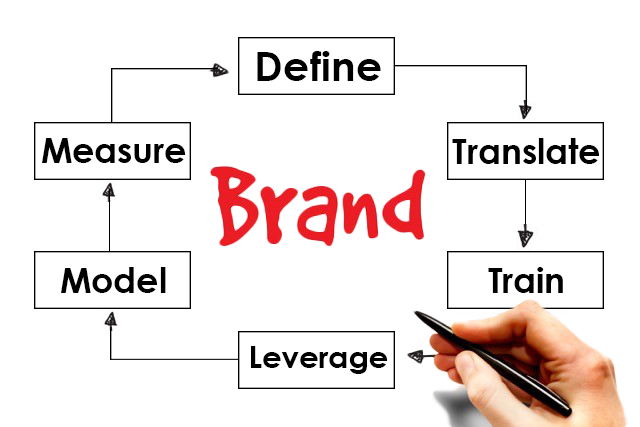
The definition of our brand, when boiled down to its simplest form, is what our customers and prospective customers think and feel about our service and our organizations.  We all have a brand.  The question is, did we choose it, or did we let others choose it for us?

Red Cape Right SideOur Brand Promises a Certain Customer Experience

We communicate our brand through every customer touch point, including through our websites, promotional materials and our written proposals for example. Our brand promises a certain customer experience.  The delivery of our brand promise comes through the interaction between our field service team and our customers.  It is critical that our field team acts and communicates in a way that is consistent with our brand and its promise because those interactions are our customer’s reality.

Here are six steps you can take to ensure that your field service representatives deliver your brand promise.

1. Define – Define your brand

By clearly articulating your brand and your brand promise, you can set the foundation to guide your technicians’ actions so that they are consistent with your brand promise.  Start by answering these three questions:

  • How do you want others to think about you?
  • How do you want others to feel about you?
  • What do you want others to say about you?

For example, a service organization that wishes to build their brand promise around the proactive efforts of their field service team may define their brand as follows:

  • How we want others to think about us:Our service provider does more than simply keeping our equipment/facilities/processes running well, they take steps to help us achieve our business goals.”
  • How we want others to feel about us: “We feel assured / We are in good hands”
  • What we want other to say about us: We are better off for having engaged our service provider.”

2. Translate – Translate the brand into actions

Having a brand promise is not enough.  We must translate that promise into action.  What specifically do we expect our field service team to do to?  How do we want our team to conduct themselves in order to communicate and reinforce our brand?

In our example above, one of the actions we would define for our field service technicians are what steps to take to identify and recommend opportunities that will help the customer. One large waste management firm who positions itself as an integral part of the community which they serve, teaches their drivers to be courteous and helpful to their “neighbours” as they go about their routes.  They also train their drivers to look for and report any suspicious activity they see along their routes in an effort to prevent crime.

3. Train – Ensure your team has the skills to execute on the brand

F. Fournes, in his book Coaching for Improving Work Performance noted that the most significant reasons why employees don’t do what they are supposed to do are because they don’t know what to do or they don’t know how to do it. Once we have clearly defined the actions, it is important that we ensure that our team has the knowledge and the skills to execute them.

4. Leverage – Use technology and processes to support your brand

We need to evaluate the technology, tools and processes that we have at our disposal to determine how we can utilize them to support the efforts of our field service team.  For example, how can the hand-held devices be used to help keep the field professional focused on delivering on the brand?  What processes need to be modified to facilitate our field service professionals’ actions.

5. Model – Model the behaviour you would like to see

What we say and how we act are important indicators of how serious we are about the initiative.  We must take care that our words and deeds are consistent with the brand promise.  Our team will pick up on our behaviours and match them accordingly.

6. Measure – Measure

If we don’t measure how well we are delivering on our brand promise, how can we possibly know if we are successful, let alone have the information to allow us to continually improve?  This measurement is more than simply asking if the customer is satisfied or if they would recommend us to others, but delves into how well we have met the promise that we made through our brand.  For example, you might ask, “How well did we … [insert brand promise here]?”

As always, I welcome your comments and questions. You can connect with me via telephone or email or leave a comment right here on the site. And as always, please feel free to leave a link back to your own blog if you have one via the commentluv feature here on the site. If you are reading this blog post via email, you will need to locate this post on my website by clicking here. Scroll down to the bottom of the page where you will find the comment section.

Jim Baston

“Be the change that you want to see in the world.”

– M. Ghandi

33078655 - 3d white people team assemble three piece of a puzzle

I meet service leaders everyday who encourage their field service teams to make proactive recommendations to their customers of products and services that will help those customers to be better off.  The vast majority of those I speak to however, do not tell their customers they are asking their field service team to do this.  That’s a pity.  Proactive recommendations by your field team are a big business differentiator.

Why Don’t More Service Firms Promote Their Field Team’s Efforts?

Before we look at the how, let’s consider the why.  It is interesting to note that most firms in my unscientific sampling do not let their customers know that they have encouraged their field service professionals to look for and make recommendations to help them be better off.  This is true, even though the efforts of the field service team can add tremendous value.  By taking proactive steps, the field service team can help your customers reduce costs, improve asset life, increase productivity and numerous other benefits.

If this is true, then, why don’t more firms tell their customers what their field team is up to?  Perhaps it is because these organizations do not feel that the customer will appreciate the real value of these proactive efforts by their field service team.  They may be right.  Unless customers are educated about the value, they may not recognize the significant impact these proactive efforts can have on their ability to achieve their own business goals.

Therefore, one of the important steps that management must take is to inform the customer of this value and use it as an important differentiator in a market that is getting increasingly competitive.  Here’s how.

1. Tell the Customer What You Are Doing

The first step is to tell the customer what you are doing and why it is of benefit to them.  Point out that your field team is in a unique position to recognize actions that the customer can take to help them achieve their business goals.  They understand the technology, they can see how the customer is applying it and they understand their own firm’s capabilities.

2. Ask the Customer for Their Permission

Once you tell the customer what you are doing, it opens up the opportunity for the customer to give you permission to engage them in this way.

The conversation might go like this.  “Mr. or Ms. Customer, as you may appreciate, our field service team includes some of the finest technical minds in this industry.  We have encouraged them to use their knowledge and expertise to look for ways that our customers can do things better and help them achieve their business goals.  We have asked our field team to proactively speak to our customers about their recommendations.  If during the course of our work for you our field service professional identifies something that they feel would be of significant benefit to you, would you have any objection if they brought it to your attention?”

3. Use the Proactive Efforts of Your Field Team to Sell New Service Contracts

Work with your sales team to create your unique selling proposition that clearly sets you apart from your competitors.  Obviously it will take some thought and it will include the unique capabilities of your organization, but it will likely cover the fact that the customer can expect that not only will their equipment be running really well during the contract, but they should expect to be presented with ideas that will help them to be better off.  Arm your sales team with case studies and testimonials.  Now your sales team will have something tangible to present to the prospect that differentiates you from your competitors.

The highest level of service we can provide is when the customer can confidently claim that they are better off for having known us.  Help your customers see the value of the proactive efforts of your field service team and use this to differentiate your business from your competitors.  These three steps will help.

As always, I welcome your comments and questions. You can connect with me via telephone or email or leave a comment right here on the site. And as always, please feel free to leave a link back to your own blog if you have one via the commentluv feature here on the site. If you are reading this blog post via email, you will need to locate this post on my website by clicking here. Scroll down to the bottom of the page where you will find the comment section.

Jim Baston

Intellectuals solve problems, geniuses prevent them.”

– Albert Einstein

15405896 - two 3d people are shaking hands

There is a lot of interest in teaching field service technicians to promote services.  This makes sense as the field service professional is in the best position to recognize opportunities and to discuss these with their customers.  To help them, many firms look to courses to train their field teams how to sell.  But, if you’re serious about engaging your technicians in product and service promotion as part of your strategy to enhance service levels, then building personal and professional credibility are the most important skills needed for proactive service teams.

Remember That They Are NOT Salespeople

Regardless of how proactive you want your technicians to be, it is important to remember that they are not salespeople and, in the interests of your business success, you don’t want them to be.  You want your customers to see them as trusted advisors who are using their expertise to help them achieve their business goals.  The most important skills they need are the abilities to communicate their personal and professional credibility to the customer.

Establishing Trust Between Field Service Professionals and Customers

Field service professionals who are recognized as skilled in promoting services know how important it is that the customer trusts them.  That trust must be in their personal motives (trusting that they are making recommendations in the interest of the customer and not their own) and their professional competence (they know what they are talking about).

These successful field engineers understand that their personal and professional credibility is earned over time by the way they interact with their customers.  They take steps to build their credibility through every customer interaction, regardless of how insignificant it might seem.

Understanding Good Communication Skills

Their success in promoting services is not because they are polished sales professionals, but because customers trust their motives and their judgment and are willing to listen to them and take action.  Understanding good communication skills helps of course.

The ability to present a recommendation to the customer in a way that communicates the benefits of taking action from the customer’s perspective helps the customer see the value in taking action.  The skill of exploring hesitation can help customers make informed decisions and avoid problems.  But, if your technicians do not have personal and professional credibility with the customer, they won’t be successful in promoting services, regardless of how helpful the recommendation is or how skilled they are in promoting it.

So, if you really want your technicians to enthusiastically embrace your strategy to engage them in business development, focus on teaching them how to build credibility with the customer.  Ensure that they know that they are not selling, but rather providing a valuable service to the customer.  Then provide them with some basic approaches to communicate the benefits of their recommendations effectively so that the customer can make an informed decision.

As always, I welcome your comments and questions. You can connect with me via telephone or email or leave a comment right here on the site. And as always, please feel free to leave a link back to your own blog if you have one via the commentluv feature here on the site. If you are reading this blog post via email, you will need to locate this post on my website by clicking here. Scroll down to the bottom of the page where you will find the comment section.

Jim Baston

“Earn trust, earn trust, earn trust. Then you can worry about the rest.”

– Seth Godin

Abstract Flow Chart

If you are engaging your field service team in business development efforts, you will be aware of the importance of having a robust and failsafe opportunity management process.  Poor processes drop opportunities, fail to keep everyone informed and generally defeat your efforts to get everyone enthusiastically involved.

In this blog, I thought it would be helpful to consider the Six Key Components of a Robust and Failsafe Opportunity Management Process for your team.

1. Clearly identify what you want your technicians to do

The process starts with having a clear understanding of what you want your technicians to do if they do find an opportunity to help.  For example, do you want them to:

  • Simply pass the opportunity over to sales (or other) for follow-up?
  • Review their ideas with the customer and get their permission for a salesperson (or other) to call?
  • Review their ideas with the customer, provide pricing, and seek the customer’s agreement to proceed?
  • Other?

2. Provide clear expectations on how you want technician to be involved in the solution

Options can include:

  • None – they leave it up to the sales team
  • Some – they provide input then back out of the process
  • Most – they work closely with the sales team (or others) to determine the final solution
  • All – they determine the final solution, price it, and present it to the customer

3. Build in flexibility to accommodate different situations

Be clear on how you want the technician (and sales team) to act as circumstances change.  Do your expectations of your field service team change depending upon the nature of the opportunity?  For example, will their actions change depending upon the:

  • Size of the opportunity?
  • Products and/or service contemplated?
  • Nature of the customer?
  • Other?

4. Define how progress on each opportunity will be communicated

Typically opportunities take time to address.  Customer visits are required, a solution must be developed and priced, customers need time to evaluate the solution, etc.  To keep the field service team engaged and enthusiastic, it is critical to keep them informed of the progress that is being made.

This also allows the technician to respond professionally in the event the customer asks a question about progress on the solution.  Having a technician respond with a flippant “I don’t know.  Those guys in the office never tell us anything”, is not helpful and certainly not professional.

5. Make it clear on who will follow up and how the follow up will take place

It is logical to place responsibility for follow up on the sales team or the person who presented the customer with the final proposal.  But, if the opportunity was quoted through sales or through another department, can the technicians play a role here?

Would it make sense to provide them with a list of outstanding proposals for each customer that they visit so that they can ask if the customer has come to some decision and perhaps provide supporting information?

I recognize that each company and each opportunity is different so this approach may not work in all cases.  However, letting a proposal to replace an old piece of equipment before it fails fall through the cracks does not help the customer if the equipment fails because they forgot about the issue.

6. Actively work to keep things on track

No system is truly failsafe for every circumstance.  Despite your best efforts, things will go wrong.  When they do, we can show leadership by addressing the underlying issues and getting things back on track quickly.

We can also address those that don’t follow the process and ensure that they understand the importance of doing so.  Failure to address problems quickly and consistently will tell everyone that the process really isn’t all that important after all.

Our technicians provide a valuable service when they take proactive actions to make recommendations that help our customers to be better off.  We can help them and help our business by ensuring that the processes we have in place work consistently and correctly.

As always, I welcome your comments and questions. You can connect with me via telephone or email or leave a comment right here on the site. And as always, please feel free to leave a link back to your own blog if you have one via the commentluv feature here on the site. If you are reading this blog post via email, you will need to locate this post on my website by clicking here. Scroll down to the bottom of the page where you will find the comment section.

Jim Baston

If you can’t describe what you are doing as a process, you don’t know what you’re doing.

– W. Edwards Deming

business-man-with-bell

December is a wonderful time of year.  But it can also be a time of high stress.  Organizations struggle to get everything done before the holidays.  Employees try to balance the surge in social commitments while continuing to take actions to meet budgets.  Systems and processes are strained by increased demands caused by weather, quotas or any other number of things.

It is a time of year when systems and circumstance combine to create a stress-fuelled environment of tension and possible conflict.  To help your field team deal with customers effectively in these stressful times, consider the following five approaches.  This will help your team maintain good relations and build higher levels of trust and remind your customers why they chose to do business with you in the first place.

  1. Connect with the customer.

Whenever stressful situations arise, it is critical for our customers to realize that they have our full attention.  We can demonstrate this by connecting with the customer.  By connecting, we mean giving our customer our full attention.  That means putting things down, standing if appropriate, exhibiting open body language[1], making eye contact and actively listening.

It is also important to show a sense of urgency in our motions and our body stance (leaning slightly forward).  Connecting with the customer in this way shows we are taking the situation seriously and interested in getting the problem resolved.

  1. Acknowledge the situation.

We can remove some of the customer’s stress and concerns by showing them that we understand.  We can do this in a number of ways.  For example, the problem being experienced is having a significant and detrimental impact on production.  We could say something like, “I can see why this is so upsetting for you, particularly given the pressures you must be facing from production to get this up and running.”  You might even say, “I can understand how stressful this must be for you, I would feel the same way, if I were in your shoes.”

Notice that I am not suggesting that we take responsibility for the problem.  We are simply acknowledging the situation that the customer is in.  This continues to build upon the trust that started when we “connected” with the customer.

  1. Explain your reasons from the customer’s perspective.

When we have to say “no”, we can explain our reasons from the customer’s perspective rather than our own.  Let’s say the customer wants us to make a temporary fix that we feel will be unsafe.  The customer is adamant that it be done and we have to say “no”.

Rather than say something like “I can’t do that.  It’s unsafe and it could get me in serious trouble.  We will have to think of something else”, it would be better to say “no” from the customer’s perspective.  For example, we could say, “Unfortunately, this suggestion could prove unsafe and I would not want to put you or your tenants in harm’s way.   There are other options that we can consider, such as …”

  1. Give the customer’s motives the benefit of the doubt.

It is vitally important that we take every customer request as a request for which they feel they are entitled to (or willing to pay for) and not an attempt to take advantage of us.  This is important because it is our perspective that will largely govern how we respond.  If we feel that the customer is “always” trying to take advantage, then our response may not be balanced and unlikely to set the stage for cooperation.

If we have the perspective that the customer is innocently asking for something that they feel they are entitled to or are willing to pay for, then our response will likely be more empathetic and geared toward establishing a foundation for collaboration.  Instead of saying, “Sorry, that’s not in the contract.  If you want me to do that, you will need to call the office and give them a P.O.”, you might consider something like, “I want to make sure that I am fair to both your company and my own.  What you are asking is not in the existing contract.  Here is what I suggest we do to get this addressed …”.

Now I know that there really are customers out there that are regularly trying to take advantage, but does it hurt to respond to them the same way as we would to a customer with an innocent request?

  1. Have alternative suggestions ready.

If we do have to say “no” to a request or tell the customer bad news, we will help keep the situation calm and provide value by having alternative suggestions ready.  Imagine a scenario where our technician tells the customer that the equipment has failed and when asked what the alternatives are simply says, “I don’t know.  I will have to look into it.”  As the customer, how comfortable would we feel about the technician’s response?  What does it tell us about the technician’s understanding of our situation?

It would be better if the technician has an answer that includes two or three alternatives that can be taken and then help us decide which option make the best sense under the circumstances.  It would be better still if the technician has made a couple of phone calls and can give even more information such as price and delivery of the various options.

December is a wonderful time of year and also one full of stress and possible conflict.  We can help our technicians through this period of stress and the inevitable interpersonal challenges that they will face with just a few simple approaches.  It is a timely gift for the month of December that can be used throughout the year.

As always, I welcome your comments and questions. You can connect with me via telephone or email or leave a comment right here on the site. And as always, please feel free to leave a link back to your own blog if you have one via the commentluv feature here on the site. If you are reading this blog post via email, you will need to locate this post on my website by clicking here. Scroll down to the bottom of the page where you will find the comment section.

Jim Baston

Stress is not what happens to us.  It’s our response
to what happens. And response is something we can choose.

– Maureen Killoran

[1] Arms uncrossed, legs comfortably apart, eye contact, etc.

One of your technicians has just made a recommendation on a critical piece of equipment.  It is old, parts are hard to find and a failure will have catastrophic results. The customer hesitates and says something like, “Leave it with me and let me think about it.”  Underlying this statement could be an objection.  It is for times like these that it makes sense to help your technicians have the skills/tools ready to (or be prepared to) handle customer objections.

You might be wondering why I am using sales terminology when I insist that the technician’s act of making recommendations is not a sale but a service.  It is because in situations like these letting the matter go without investigating the customer’s reason for their hesitation does not fulfill our obligation to serve the customer in the best way possible.  Let’s examine why.

Why the customer may hesitate

The customer may hesitate for several reasons.  Perhaps they really do want to think about it, do the math and make a financial determination and that will take time.  Perhaps they need the approval of someone else or have another company that they would have do the work.  Maybe they are sceptical of the solution or don’t fully trust the technician. Or maybe they do not fully understand the risk of not taking action or the benefit of moving forward and therefore cannot make a fully informed decision.

Regardless, if the stakes are high, then the technician should be prepared to explore the cause of hesitation further and try to address their concerns if appropriate.  By not doing so, they are letting the customer make a choice that he/she may later regret and they certainly won’t thank us if they do.  And, it certainly won’t be helpful if we say something like, “You should have listened to me when I told you to …” when things do go as the technician predicted.

What we can do

  1. Ensure your technicians are aware of and expect that the customer may have concerns about any recommendation.
  2. Help your technicians be prepared to explore any concerns and have a plan to address them if they do arise.
  3. Have a backup plan if the technician is unsuccessful.

“Do you mind if I ask the reason for your hesitation?”

Let’s go back to the example of an imminent equipment failure.  The risk to the customer is high and yet they may say, “Leave it with me and let me think about it.”

Keeping in mind that the customer may genuinely wish to think about the issue, your technician can ask a simple question to help them get to the underlying concern.  “Do you mind if I ask the reason for your hesitation?” Chances are, the customer will answer this question with underlying cause for their hesitation.

By exploring the apparent concern of the customer, the technician will be in a better position to help the customer assess the recommendation and make a more informed decision.

Here are just a few examples of what to expect:

  • Hesitation based on scepticism: “My last service company never mentioned this” (often happens when you win a contract from a competitor and the technician has not had time to build trust) or “You guys have been looking after my equipment for the past 10 years, how come you’re just bringing this up now?”
  • Hesitation based on current buying habits: “I already have a company that can do that work for me.”
  • Hesitation based on uncertainty: “I am not sure if it will …”
  • Hesitation based on pricing and/or budgets: “We don’t have any reserve in the budget.”

With these examples in hand, you can help spend some time during your safety/service meetings with your technicians to help them develop a professional response to each of them if they do arise.  The customer may still say “no” despite your technician’s best efforts but at least the decision will be a better informed one.

Have a back up plan. 

What if the technician was unable to deal with the customer’s underlying concern and the matter is of some urgency?  An equipment failure for example could be catastrophic.  Should they push harder?  My answer is that they should not.

However, they should not drop the matter either.  I suggest that you have in place a process where in these circumstances, the technician can alert management so that a responsible follow-up with the customer can be taken by the manager or the sales team.

As always, I welcome your comments and questions. You can connect with me via telephone or email or leave a comment right here on the site. And as always, please feel free to leave a link back to your own blog if you have one via the commentluv feature here on the site. If you are reading this blog post via email, you will need to locate this post on my website by clicking here. Scroll down to the bottom of the page where you will find the comment section.

Jim Baston

“He who hesitates is last.”

 – Mae West

Your field service team can add tremendous value to your service relationships when they recommend products and services that you can provide that will help your customers be better off.  They are in a unique position to do this; they have the knowledge of the technology, an inside understanding of your customer’s current processes and equipment and, hopefully an appreciation of your customer’s goals and objectives.  They also have proximity to the customer.  The question is however, if you engage your technicians in promoting your services, do you tell your customers?

Do You Tell Your Customers?

I recently spoke at the Field Service Forum in Amsterdam.  I asked how many of the attendees either formally or informally encouraged their technicians to proactively recommend their services to their customers.  About 60% of the room raised their hands.  I then asked how many of those who raised their hands told their customers that they were engaging their technicians in this way and not a single person responded that they did.  This is entirely consistent with other discussions that I have had.

How about you?  Do you tell your customers?  Do you tell them that you are encouraging your technicians to look for products and services to recommend to them?  If you are not, you are missing out on an important opportunity.

Why Not?

Let’s examine one of the reasons why we seem so hesitant to let our customers know about the promotion of products and services by our technicians.  I believe that underlying our reluctance is that we tend to see the actions of our technicians as a “selling” activity.  And, it’s hard to promote “selling” as a benefit to our customers.

Where is the value for the customer in a conversation that goes like this?  “Mr./Mrs. Customer, I want you to know that we have encouraged our technicians to look for opportunities for us to sell you more services so that we can increase the revenues we receive from you.”  It’s hard to see any value in this statement, regardless of how noble our intentions or those of our field service team are.

Remember, It is a Service

The key is to keep in mind that we want our technicians to use their expertise and proximity to look for opportunities to help the customer and raise these with the customer when they find them.  This is valuable because the actions of our technicians can truly help our customers to be better off and to achieve their business goals.  Their recommendations therefore, are a service.

Yes, as service providers, we do benefit from this proactive activity through increased service revenues, but those revenues are our reward in return for the value of the service that we provide.  By regarding the proactive activities of our technicians through a service lens, it becomes easier to promote their activities just like we would any other service that we provide.

Have this Conversation with your Customers

An excellent way to promote the proactive actions of our technicians is to have this conversation with our customers.  “Mr./Mrs. Customer, we have provided direction and training to our technicians to encourage them to look for opportunities to help you operate your facility/processes more effectively while they are performing the service.  Would you have any objection when they find something that will help you achieve your business goals, if they bring the opportunity to your attention?”

By explaining the actions of our technicians in this way, we are able to communicate the value of their efforts for the customer.

If you formally or informally engage your technicians in business development activities, I encourage you to tell your customers – and let them know why it is of value for them.

Promote their efforts to your customers as a point of difference.  Let them know that you are providing your “heads” as well as your “hands”.  When they recognize the value of these efforts and benefit from the resulting recommendations, they will be delighted that you have engaged your technicians in this way.

As always, I welcome your comments and questions. You can connect with me via telephone or email or leave a comment right here on the site. And as always, please feel free to leave a link back to your own blog if you have one via the commentluv feature here on the site. If you are reading this blog post via email, you will need to locate this post on my website by clicking here. Scroll down to the bottom of the page where you will find the comment section.

Jim Baston

“You are not here merely to make a living. You are here in order to enable the world to live more amply, with greater vision, with a finer spirit of hope and achievement. You are here to enrich the world, and you impoverish yourself if you forget the errand.”

– Woodrow Wilson