Tag Archive for: how to increase customer service satisfaction

brand3

The definition of our brand, when boiled down to its simplest form, is what our customers and prospective customers think and feel about our service and our organizations.  We all have a brand.  The question is, did we choose it, or did we let others choose it for us?

Red Cape Right SideOur Brand Promises a Certain Customer Experience

We communicate our brand through every customer touch point, including through our websites, promotional materials and our written proposals for example. Our brand promises a certain customer experience.  The delivery of our brand promise comes through the interaction between our field service team and our customers.  It is critical that our field team acts and communicates in a way that is consistent with our brand and its promise because those interactions are our customer’s reality.

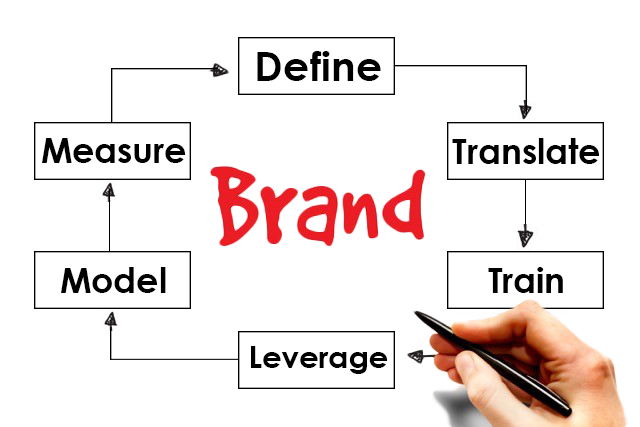
Here are six steps you can take to ensure that your field service representatives deliver your brand promise.

1. Define – Define your brand

By clearly articulating your brand and your brand promise, you can set the foundation to guide your technicians’ actions so that they are consistent with your brand promise.  Start by answering these three questions:

  • How do you want others to think about you?
  • How do you want others to feel about you?
  • What do you want others to say about you?

For example, a service organization that wishes to build their brand promise around the proactive efforts of their field service team may define their brand as follows:

  • How we want others to think about us:Our service provider does more than simply keeping our equipment/facilities/processes running well, they take steps to help us achieve our business goals.”
  • How we want others to feel about us: “We feel assured / We are in good hands”
  • What we want other to say about us: We are better off for having engaged our service provider.”

2. Translate – Translate the brand into actions

Having a brand promise is not enough.  We must translate that promise into action.  What specifically do we expect our field service team to do to?  How do we want our team to conduct themselves in order to communicate and reinforce our brand?

In our example above, one of the actions we would define for our field service technicians are what steps to take to identify and recommend opportunities that will help the customer. One large waste management firm who positions itself as an integral part of the community which they serve, teaches their drivers to be courteous and helpful to their “neighbours” as they go about their routes.  They also train their drivers to look for and report any suspicious activity they see along their routes in an effort to prevent crime.

3. Train – Ensure your team has the skills to execute on the brand

F. Fournes, in his book Coaching for Improving Work Performance noted that the most significant reasons why employees don’t do what they are supposed to do are because they don’t know what to do or they don’t know how to do it. Once we have clearly defined the actions, it is important that we ensure that our team has the knowledge and the skills to execute them.

4. Leverage – Use technology and processes to support your brand

We need to evaluate the technology, tools and processes that we have at our disposal to determine how we can utilize them to support the efforts of our field service team.  For example, how can the hand-held devices be used to help keep the field professional focused on delivering on the brand?  What processes need to be modified to facilitate our field service professionals’ actions.

5. Model – Model the behaviour you would like to see

What we say and how we act are important indicators of how serious we are about the initiative.  We must take care that our words and deeds are consistent with the brand promise.  Our team will pick up on our behaviours and match them accordingly.

6. Measure – Measure

If we don’t measure how well we are delivering on our brand promise, how can we possibly know if we are successful, let alone have the information to allow us to continually improve?  This measurement is more than simply asking if the customer is satisfied or if they would recommend us to others, but delves into how well we have met the promise that we made through our brand.  For example, you might ask, “How well did we … [insert brand promise here]?”

As always, I welcome your comments and questions. You can connect with me via telephone or email or leave a comment right here on the site. And as always, please feel free to leave a link back to your own blog if you have one via the commentluv feature here on the site. If you are reading this blog post via email, you will need to locate this post on my website by clicking here. Scroll down to the bottom of the page where you will find the comment section.

Jim Baston

“Be the change that you want to see in the world.”

– M. Ghandi

If you are encouraging your technicians to take proactive steps to recommend your products and services to your customers, you may be looking for ways to help them to explore for opportunities to help.  Here are four simple steps that your technicians can take to uncover opportunities to help your customers to be better off.

1. Ask a simple question.

At the beginning or end of each maintenance service call, get your technicians in the habit of asking, “Is there anything else that we can do for you today?”  This simple question will often result in new opportunities that otherwise might go to someone else or go unfilled.

Other questions you may wish your techs to ask include, “Have there been any changes in the building/process/operations since the last time I was here?” or “Have there been any issues or concerns related to the building/process/operations since last time?”

2. Take the customer on a tour of their own facilities.

This approach was shared with me by a seasoned HVAC technician who regularly took his customers on tours.  He used it as an opportunity to showcase the work he was doing, point out equipment that was not under contract and suggest new ideas to make improvements.  His customers appreciated the opportunity to learn more about their systems and he used the time to learn more about the customers’ goals and objectives.

3. Follow up on previously quoted work.

No doubt you have several proposals that have been sent to customers that have not had any follow up.  To the best of your knowledge, no action has been taken by the customer, but you are not certain of the status.  In many cases, it will be because the customer has forgotten about them.

Encourage your technicians to speak to the customer about those outstanding proposals.  The customer will appreciate their interest and they will thank the technician if their follow-up prevented something from falling though the cracks.

4. Offer to demonstrate a new technology or software.

Technology is changing at a rapid pace and it is almost impossible for our customers to keep on top of what is going on.  When there is a technology or software that you offer that can help customers get a competitive edge, then you will be providing a valuable service bringing it to your customer’s attention.

By taking the initiative to proactively explore for opportunities to help your customers to be better off, not only will you generate more revenues, but your technicians will actually be delivering a higher level of service.  Your customers will appreciate the added attention and see great value as you help them achieve their business goals.

As always, I welcome your comments and questions. You can connect with me via telephone or email or leave a comment right here on the site. And as always, please feel free to leave a link back to your own blog if you have one via the commentluv feature here on the site. If you are reading this blog post via email, you will need to locate this post on my website by clicking here. Scroll down to the bottom of the page where you will find the comment section.

Jim Baston

“I learned that you don’t get anywhere by sitting comfortably in a chair.”

 – Conrad Hilton

What is a simple question that delivers exceptional service and generates profitable revenue? It’s the one question that every field service technician should ask.  So, why isn’t every field service technician asking it?

In our workshops, we discuss the value that field service professionals provide by bringing opportunities to our customers’ attention that can help them operate their facilities/processes more effectively.  One way to uncover these opportunities is to ask this question, “Is there anything else that I can help you with today?”

Strangely, only 10% to 20% are asking this question

When I ask how many in attendance ask that question, I am amazed that typically only 10% or 20% put up their hands.  And I am further amazed at how enthusiastic those who do ask the question are about the value that they are creating by asking it.  To drive the point home of how valuable this question is for the customer, I simply ask those who do use the question a few questions.  The discussion usually goes like this:

Jim: Tell me, when you ask the question, how does the customer respond?  Do they tell you that it is none of your business?

Tech: [Chuckle] Of course not.  Actually, they appreciate the question.  I often get one of three responses:

  1. Can’t think of anything.
  2. Thanks for reminding me.  We have been having …
  3. You guys don’t happen to do [some service need], do you?

Jim: Do you think your customers appreciate the fact that you ask that question?

Tech: Sure do. It reminds them of something that they intended to speak to me about.  Sometimes we get opportunities to provide services that they didn’t previously buy from us because they didn’t know we did it.  It also provides clues to potential underlying problems that we can help with.

Jim: Can you think of any reason why you should not ask the question?

Tech: No.  It’s a great question.  It’s good for the customer and it’s good for us.

Why don’t more service managers ensure their field service teams asks?

If this question is of such value and is appreciated by customers, why don’t more of us as service managers ensure that everyone on our field service team ask it?  One reason I suppose, is the one given to me by some of the attendees.  They tell me that they don’t ask the question because they will not have time to respond to the customer’s request if it does arise.  They have other customers to attend to and don’t have a lot of “spare time” to address additional issues.  Although I can see their point, does it have to be a reason not to ask?  And, if we don’t ask the question, who will the customer turn to to get any outstanding issues resolved?

Make asking the question a part of your service technician’s routine

My suggestion is to make the question part of the service discussion at the end (or the beginning) of each service call, and then teach the technicians how to address the three typical customer responses (see above).  We can clarify with our field teams what our expectations are for “having a quick look” and what they can say to delay any follow up without giving the impression of putting the customer off.  If time is really an issue, we can provide clear steps the field team can take to get another team member to deal with the issue.

This questions provides great customer service and may help your bottom line

By asking if there is anything else that we can do for the customer today, we provide an excellent service to the customer by reminding them of issues they wanted to talk to us about, uncovering larger issues that may be underlying the customer’s response and informing the customer of other things we do as a service organization.  No doubt we have some on our team that provide this level of service for our customers.  Why not all?

As always, I welcome your comments and questions. You can connect with me via telephone or email or leave a comment right here on the site. And as always, please feel free to leave a link back to your own blog if you have one via the commentluv feature here on the site. If you are reading this blog post via email, you will need to locate this post on my website by clicking here. Scroll down to the bottom of the page where you will find the comment section.

Jim Baston

“It is not the answer that enlightens, but the question.”

– Eugene Ionesco

customer service tech training expertI received an important reminder about giving customers our hearts as well and our heads.  I was having lunch with a good friend and client last week and we got onto the topic of the benefits and pitfalls of engaging technicians in business development activities.  In particularly we were talking about how sales people can use the proactive promotion of services by their technicians to differentiate themselves when selling contract services.  I mentioned that while most companies give their customers their hands (i.e. do good work), proactive service companies provide customers with their heads as well.  By looking out for their customers and making helpful suggestions to allow them to be more effective at operating their facilities, they are providing the highest level of service.
Steve, who is a key part of a large, national service firm suggested, “Actually Jim, I agree with you but I think you need to be more specific.  When engaging our service technicians in speaking to customers about the other things we can do to assist them, we need to ensure that they use their hearts as well as their heads.”  Steve went on to relate a story that a service manager told him.  It seems that they had a technician on staff who took promoting services to a new high.  He would promote anything and everything to anybody that would listen.  As a result, this service manager was getting complaints from several customers.  They didn’t appreciate being “sold” when the technician was really there to service their equipment.  Steve went on, “This technician wasn’t really acting on behalf of the customer, he was acting for himself and the benefits that he would get if the customer bought the product or service he was offering.  His heart was not in the right place and the customers could spot it a mile away.”

Steve was right.  Technicians have to engage the customer in these kinds of discussions for the right reasons.  They have to believe that the customer will be better off by taking their recommendations.  If they don’t believe that the recommended action is in the interest of the customer, then they should not be suggesting the service at all.  That is one of the reasons I don’t think that “commissions” or “bonuses” should be paid for services sold by the technician.  It encourages the behaviour but for the wrong reasons.

I encourage you to look closely at your own programs for promoting services through your technicians.  Are your technicians empowered to give your customers their hearts as well as their hands?  Do your support systems (like bonuses or commissions) reinforce this approach or do they encourage them to leave their hearts in the truck?  Have you made it clear that you want them to use good judgement before making recommendations and be certain, in their own minds, that the recommendation is truly in the interests of the customer?

I’d love your feedback on this. And as always, please feel free to leave a link back to your own blog if you have one via the commentluv feature here on the site. If you are reading this blog post via email, you will need to locate this post on my website by clicking here. Scroll down to the bottom of the page where you will find the comment section.

Jim

“A good head and a good heart are always a formidable combination.”

– Nelson Mandela

Transforming the service experience with tangiblesIn my previous blog in this series, we discussed how to transform the service experience through ‘assurance’. In this blog post, we will consider what we can do to transform the service experience through the tangible aspects of the service we provide.  Our customers will make judgments about the quality of our work and the competence of our technicians based on tangible clues that they can see.

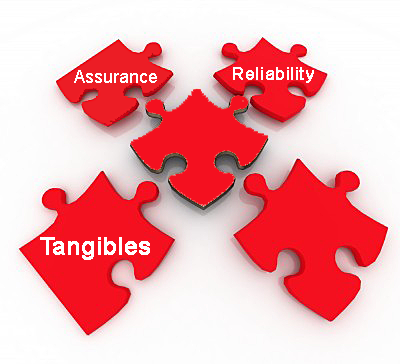
Recall that the name RATER[1] is an acronym with each letter representing the first letter of one of the five key dimensions of service quality.  They are:

R eliability: Our ability to provide what is promised, dependably and accurately

A ssurance: Our knowledge and courtesy, and our ability to convey trust and confidence

T angibles:  Our physical facilities and equipment, and our appearance

E mpathy:    The degree of caring and individual attention we provide to customers

R esponsiveness:     Our willingness to help customers and provide prompt service

Read more

CMCEF LOGO The next and final webinar in the CMCEF Webinar Series is called Maintaining the Service Experience and will take place on Tuesday, February 26th, 2013.   On February 12th, 2013, I presented the second webinar in the Transforming the Service Experience series hosted by the Canadian Mechanical Contractors Education Foundation.  The Webinar was called Creating the Service Experience. In the webinar, we considered the five key hurdles to successfully engaging our technicians in activities to transform the service experience resulting in more revenues and higher customer satisfaction and retention.  The hurdles that can prevent our technicians from doing what we would like them to do are:

  1. Knowledge:  We must clearly define our expectations of what we want our technicians to do.  Often we assume that our technicians know what is expected and overlook the importance of this step.
  2. Skills:  We must ensure that our technicians have the skills to act in the manner we ask of them.  Engaging in proactive discussions with customers may be uncomfortable for some of our technicians and they may lack the skills to do so effectively.
  3. Perception:  We must ensure that our technicians understand why we ask them to act as we do.  Speaking to customers about our services and capabilities may be perceived as a sales task by our technicians.  They need to understand that helping our customers operate their facilities more effectively is a service, not a sale.
  4. Tools and processes:  We must make certain that the technicians have the tools and are supported by our processes to do what we want them to.  When our processes do not support our technician’s efforts, they will perceive that what we are asking is not that important and quickly lose heart.
  5. Motivation:  To get our technicians to enthusiastically embrace a proactive service approach, they must want to do it.  Otherwise, at best they will simply go through the motions or, at worst, not act in the manner we would like them to at all.

Read more

customer service assurance In the last blog post, we discussed transforming the service experience through reliability. Let us now consider what we can do to transform the service experience by creating the feeling of assurance in our customer’s mind.  That is, helping them, as they reflect on our service, say to themselves “That’s why I do business with you!”

As we know, the name RATER[1] is an acronym with each letter representing the first letter of one of the five key dimensions of service quality.  They are:

Reliability: Our ability to provide what is promised, dependably and accurately

Assurance: Our knowledge and courtesy, and our ability to convey trust and confidence

Tangibles: Our physical facilities and equipment, and our appearance

Empathy: The degree of caring and individual attention we provide to customers

Responsiveness: Our willingness to help customers and provide prompt service

To help our customers experience each of these dimensions when working with us, we need to ensure that our employees act in ways that allow our customers to experience these dimensions.  Today we will look at creating Assurance for the customer.

Read more