Tag Archive for: how to provide excellent customer service

brand3

The definition of our brand, when boiled down to its simplest form, is what our customers and prospective customers think and feel about our service and our organizations.  We all have a brand.  The question is, did we choose it, or did we let others choose it for us?

Red Cape Right SideOur Brand Promises a Certain Customer Experience

We communicate our brand through every customer touch point, including through our websites, promotional materials and our written proposals for example. Our brand promises a certain customer experience.  The delivery of our brand promise comes through the interaction between our field service team and our customers.  It is critical that our field team acts and communicates in a way that is consistent with our brand and its promise because those interactions are our customer’s reality.

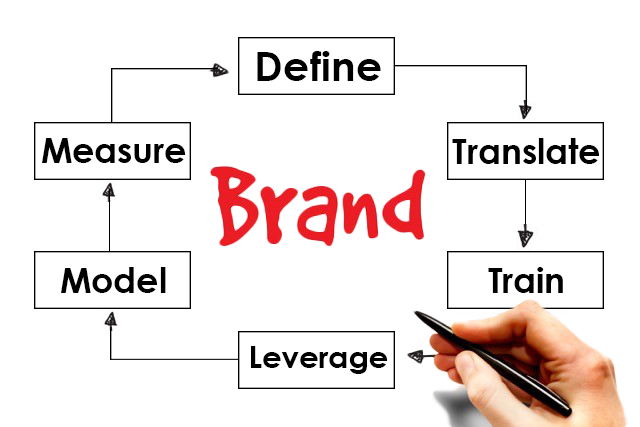
Here are six steps you can take to ensure that your field service representatives deliver your brand promise.

1. Define – Define your brand

By clearly articulating your brand and your brand promise, you can set the foundation to guide your technicians’ actions so that they are consistent with your brand promise.  Start by answering these three questions:

  • How do you want others to think about you?
  • How do you want others to feel about you?
  • What do you want others to say about you?

For example, a service organization that wishes to build their brand promise around the proactive efforts of their field service team may define their brand as follows:

  • How we want others to think about us:Our service provider does more than simply keeping our equipment/facilities/processes running well, they take steps to help us achieve our business goals.”
  • How we want others to feel about us: “We feel assured / We are in good hands”
  • What we want other to say about us: We are better off for having engaged our service provider.”

2. Translate – Translate the brand into actions

Having a brand promise is not enough.  We must translate that promise into action.  What specifically do we expect our field service team to do to?  How do we want our team to conduct themselves in order to communicate and reinforce our brand?

In our example above, one of the actions we would define for our field service technicians are what steps to take to identify and recommend opportunities that will help the customer. One large waste management firm who positions itself as an integral part of the community which they serve, teaches their drivers to be courteous and helpful to their “neighbours” as they go about their routes.  They also train their drivers to look for and report any suspicious activity they see along their routes in an effort to prevent crime.

3. Train – Ensure your team has the skills to execute on the brand

F. Fournes, in his book Coaching for Improving Work Performance noted that the most significant reasons why employees don’t do what they are supposed to do are because they don’t know what to do or they don’t know how to do it. Once we have clearly defined the actions, it is important that we ensure that our team has the knowledge and the skills to execute them.

4. Leverage – Use technology and processes to support your brand

We need to evaluate the technology, tools and processes that we have at our disposal to determine how we can utilize them to support the efforts of our field service team.  For example, how can the hand-held devices be used to help keep the field professional focused on delivering on the brand?  What processes need to be modified to facilitate our field service professionals’ actions.

5. Model – Model the behaviour you would like to see

What we say and how we act are important indicators of how serious we are about the initiative.  We must take care that our words and deeds are consistent with the brand promise.  Our team will pick up on our behaviours and match them accordingly.

6. Measure – Measure

If we don’t measure how well we are delivering on our brand promise, how can we possibly know if we are successful, let alone have the information to allow us to continually improve?  This measurement is more than simply asking if the customer is satisfied or if they would recommend us to others, but delves into how well we have met the promise that we made through our brand.  For example, you might ask, “How well did we … [insert brand promise here]?”

As always, I welcome your comments and questions. You can connect with me via telephone or email or leave a comment right here on the site. And as always, please feel free to leave a link back to your own blog if you have one via the commentluv feature here on the site. If you are reading this blog post via email, you will need to locate this post on my website by clicking here. Scroll down to the bottom of the page where you will find the comment section.

Jim Baston

“Be the change that you want to see in the world.”

– M. Ghandi

business-man-with-bell

December is a wonderful time of year.  But it can also be a time of high stress.  Organizations struggle to get everything done before the holidays.  Employees try to balance the surge in social commitments while continuing to take actions to meet budgets.  Systems and processes are strained by increased demands caused by weather, quotas or any other number of things.

It is a time of year when systems and circumstance combine to create a stress-fuelled environment of tension and possible conflict.  To help your field team deal with customers effectively in these stressful times, consider the following five approaches.  This will help your team maintain good relations and build higher levels of trust and remind your customers why they chose to do business with you in the first place.

  1. Connect with the customer.

Whenever stressful situations arise, it is critical for our customers to realize that they have our full attention.  We can demonstrate this by connecting with the customer.  By connecting, we mean giving our customer our full attention.  That means putting things down, standing if appropriate, exhibiting open body language[1], making eye contact and actively listening.

It is also important to show a sense of urgency in our motions and our body stance (leaning slightly forward).  Connecting with the customer in this way shows we are taking the situation seriously and interested in getting the problem resolved.

  1. Acknowledge the situation.

We can remove some of the customer’s stress and concerns by showing them that we understand.  We can do this in a number of ways.  For example, the problem being experienced is having a significant and detrimental impact on production.  We could say something like, “I can see why this is so upsetting for you, particularly given the pressures you must be facing from production to get this up and running.”  You might even say, “I can understand how stressful this must be for you, I would feel the same way, if I were in your shoes.”

Notice that I am not suggesting that we take responsibility for the problem.  We are simply acknowledging the situation that the customer is in.  This continues to build upon the trust that started when we “connected” with the customer.

  1. Explain your reasons from the customer’s perspective.

When we have to say “no”, we can explain our reasons from the customer’s perspective rather than our own.  Let’s say the customer wants us to make a temporary fix that we feel will be unsafe.  The customer is adamant that it be done and we have to say “no”.

Rather than say something like “I can’t do that.  It’s unsafe and it could get me in serious trouble.  We will have to think of something else”, it would be better to say “no” from the customer’s perspective.  For example, we could say, “Unfortunately, this suggestion could prove unsafe and I would not want to put you or your tenants in harm’s way.   There are other options that we can consider, such as …”

  1. Give the customer’s motives the benefit of the doubt.

It is vitally important that we take every customer request as a request for which they feel they are entitled to (or willing to pay for) and not an attempt to take advantage of us.  This is important because it is our perspective that will largely govern how we respond.  If we feel that the customer is “always” trying to take advantage, then our response may not be balanced and unlikely to set the stage for cooperation.

If we have the perspective that the customer is innocently asking for something that they feel they are entitled to or are willing to pay for, then our response will likely be more empathetic and geared toward establishing a foundation for collaboration.  Instead of saying, “Sorry, that’s not in the contract.  If you want me to do that, you will need to call the office and give them a P.O.”, you might consider something like, “I want to make sure that I am fair to both your company and my own.  What you are asking is not in the existing contract.  Here is what I suggest we do to get this addressed …”.

Now I know that there really are customers out there that are regularly trying to take advantage, but does it hurt to respond to them the same way as we would to a customer with an innocent request?

  1. Have alternative suggestions ready.

If we do have to say “no” to a request or tell the customer bad news, we will help keep the situation calm and provide value by having alternative suggestions ready.  Imagine a scenario where our technician tells the customer that the equipment has failed and when asked what the alternatives are simply says, “I don’t know.  I will have to look into it.”  As the customer, how comfortable would we feel about the technician’s response?  What does it tell us about the technician’s understanding of our situation?

It would be better if the technician has an answer that includes two or three alternatives that can be taken and then help us decide which option make the best sense under the circumstances.  It would be better still if the technician has made a couple of phone calls and can give even more information such as price and delivery of the various options.

December is a wonderful time of year and also one full of stress and possible conflict.  We can help our technicians through this period of stress and the inevitable interpersonal challenges that they will face with just a few simple approaches.  It is a timely gift for the month of December that can be used throughout the year.

As always, I welcome your comments and questions. You can connect with me via telephone or email or leave a comment right here on the site. And as always, please feel free to leave a link back to your own blog if you have one via the commentluv feature here on the site. If you are reading this blog post via email, you will need to locate this post on my website by clicking here. Scroll down to the bottom of the page where you will find the comment section.

Jim Baston

Stress is not what happens to us.  It’s our response
to what happens. And response is something we can choose.

– Maureen Killoran

[1] Arms uncrossed, legs comfortably apart, eye contact, etc.

What is a simple question that delivers exceptional service and generates profitable revenue? It’s the one question that every field service technician should ask.  So, why isn’t every field service technician asking it?

In our workshops, we discuss the value that field service professionals provide by bringing opportunities to our customers’ attention that can help them operate their facilities/processes more effectively.  One way to uncover these opportunities is to ask this question, “Is there anything else that I can help you with today?”

Strangely, only 10% to 20% are asking this question

When I ask how many in attendance ask that question, I am amazed that typically only 10% or 20% put up their hands.  And I am further amazed at how enthusiastic those who do ask the question are about the value that they are creating by asking it.  To drive the point home of how valuable this question is for the customer, I simply ask those who do use the question a few questions.  The discussion usually goes like this:

Jim: Tell me, when you ask the question, how does the customer respond?  Do they tell you that it is none of your business?

Tech: [Chuckle] Of course not.  Actually, they appreciate the question.  I often get one of three responses:

  1. Can’t think of anything.
  2. Thanks for reminding me.  We have been having …
  3. You guys don’t happen to do [some service need], do you?

Jim: Do you think your customers appreciate the fact that you ask that question?

Tech: Sure do. It reminds them of something that they intended to speak to me about.  Sometimes we get opportunities to provide services that they didn’t previously buy from us because they didn’t know we did it.  It also provides clues to potential underlying problems that we can help with.

Jim: Can you think of any reason why you should not ask the question?

Tech: No.  It’s a great question.  It’s good for the customer and it’s good for us.

Why don’t more service managers ensure their field service teams asks?

If this question is of such value and is appreciated by customers, why don’t more of us as service managers ensure that everyone on our field service team ask it?  One reason I suppose, is the one given to me by some of the attendees.  They tell me that they don’t ask the question because they will not have time to respond to the customer’s request if it does arise.  They have other customers to attend to and don’t have a lot of “spare time” to address additional issues.  Although I can see their point, does it have to be a reason not to ask?  And, if we don’t ask the question, who will the customer turn to to get any outstanding issues resolved?

Make asking the question a part of your service technician’s routine

My suggestion is to make the question part of the service discussion at the end (or the beginning) of each service call, and then teach the technicians how to address the three typical customer responses (see above).  We can clarify with our field teams what our expectations are for “having a quick look” and what they can say to delay any follow up without giving the impression of putting the customer off.  If time is really an issue, we can provide clear steps the field team can take to get another team member to deal with the issue.

This questions provides great customer service and may help your bottom line

By asking if there is anything else that we can do for the customer today, we provide an excellent service to the customer by reminding them of issues they wanted to talk to us about, uncovering larger issues that may be underlying the customer’s response and informing the customer of other things we do as a service organization.  No doubt we have some on our team that provide this level of service for our customers.  Why not all?

As always, I welcome your comments and questions. You can connect with me via telephone or email or leave a comment right here on the site. And as always, please feel free to leave a link back to your own blog if you have one via the commentluv feature here on the site. If you are reading this blog post via email, you will need to locate this post on my website by clicking here. Scroll down to the bottom of the page where you will find the comment section.

Jim Baston

“It is not the answer that enlightens, but the question.”

– Eugene Ionesco

Your field service team can add tremendous value to your service relationships when they recommend products and services that you can provide that will help your customers be better off.  They are in a unique position to do this; they have the knowledge of the technology, an inside understanding of your customer’s current processes and equipment and, hopefully an appreciation of your customer’s goals and objectives.  They also have proximity to the customer.  The question is however, if you engage your technicians in promoting your services, do you tell your customers?

Do You Tell Your Customers?

I recently spoke at the Field Service Forum in Amsterdam.  I asked how many of the attendees either formally or informally encouraged their technicians to proactively recommend their services to their customers.  About 60% of the room raised their hands.  I then asked how many of those who raised their hands told their customers that they were engaging their technicians in this way and not a single person responded that they did.  This is entirely consistent with other discussions that I have had.

How about you?  Do you tell your customers?  Do you tell them that you are encouraging your technicians to look for products and services to recommend to them?  If you are not, you are missing out on an important opportunity.

Why Not?

Let’s examine one of the reasons why we seem so hesitant to let our customers know about the promotion of products and services by our technicians.  I believe that underlying our reluctance is that we tend to see the actions of our technicians as a “selling” activity.  And, it’s hard to promote “selling” as a benefit to our customers.

Where is the value for the customer in a conversation that goes like this?  “Mr./Mrs. Customer, I want you to know that we have encouraged our technicians to look for opportunities for us to sell you more services so that we can increase the revenues we receive from you.”  It’s hard to see any value in this statement, regardless of how noble our intentions or those of our field service team are.

Remember, It is a Service

The key is to keep in mind that we want our technicians to use their expertise and proximity to look for opportunities to help the customer and raise these with the customer when they find them.  This is valuable because the actions of our technicians can truly help our customers to be better off and to achieve their business goals.  Their recommendations therefore, are a service.

Yes, as service providers, we do benefit from this proactive activity through increased service revenues, but those revenues are our reward in return for the value of the service that we provide.  By regarding the proactive activities of our technicians through a service lens, it becomes easier to promote their activities just like we would any other service that we provide.

Have this Conversation with your Customers

An excellent way to promote the proactive actions of our technicians is to have this conversation with our customers.  “Mr./Mrs. Customer, we have provided direction and training to our technicians to encourage them to look for opportunities to help you operate your facility/processes more effectively while they are performing the service.  Would you have any objection when they find something that will help you achieve your business goals, if they bring the opportunity to your attention?”

By explaining the actions of our technicians in this way, we are able to communicate the value of their efforts for the customer.

If you formally or informally engage your technicians in business development activities, I encourage you to tell your customers – and let them know why it is of value for them.

Promote their efforts to your customers as a point of difference.  Let them know that you are providing your “heads” as well as your “hands”.  When they recognize the value of these efforts and benefit from the resulting recommendations, they will be delighted that you have engaged your technicians in this way.

As always, I welcome your comments and questions. You can connect with me via telephone or email or leave a comment right here on the site. And as always, please feel free to leave a link back to your own blog if you have one via the commentluv feature here on the site. If you are reading this blog post via email, you will need to locate this post on my website by clicking here. Scroll down to the bottom of the page where you will find the comment section.

Jim Baston

“You are not here merely to make a living. You are here in order to enable the world to live more amply, with greater vision, with a finer spirit of hope and achievement. You are here to enrich the world, and you impoverish yourself if you forget the errand.”

– Woodrow Wilson

Thought - 3D

I was engaged in a conversation recently about why communication plays such an important role in the world of service.  It was an interesting discussion and allowed me the opportunity to share my definition of effective communication for the service business.

The quality of our communication is relied on to assess our competence

The quality of our communication is a major source of information that our customers rely on to evaluate our competence and the value of our work.  As an intangible service, it is almost impossible for a customer to accurately evaluate actual work quality or competence directly.  For example, if it takes us one hour to troubleshoot a problem, how does the customer know that the hour spent was amazing and that it would have taken anyone else a day or more to figure out the problem?  The answer is that they don’t really know, so they look to their perception of the quality of our communication as an important input that they use to assess our competence.

Communication can be intentional or unintentional

It is important to remember that communication can be intentional or unintentional.  For example, we can send an email as a way of intentionally communicating specific information.  Unintentional communication may also occur based on the quality of that email.  How the email is constructed (does it use good sentence structure, is it free from spelling errors, etc.) may communicate information to the customer that they use to evaluate our competence. So, for example, a poorly constructed email that has incorrect grammar and plenty of spelling mistakes, may unintentionally communicate an image of us that is not very complimentary.

We can limit the amount of unintentional communication that takes place.  If we recognize that the quality of the email that we send will also communicate something about our professionalism, then we can intentionally make an effort to ensure that the email is constructed in a manner that contributes to the communication of our professionalism.

Effective communication for the service business

Which brings me to my definition of effective communication for the service business.  Effective communication will achieve three objectives:

  1. Accurately transfer information
  2. Create the feeling of assurance in the receiver
  3. Reflect positively on the sender

Obviously, accurately transferring information is important.  Presumably it is the reason we sent the email or had a telephone conversation in the first place.  To be effective, the receiver must understand the meaning of the message in the way it was intended by us as the sender.  The second and third points are also important because they contribute to the perceived value of our work.

We’re in control

Fortunately, we can consciously construct our emails, conduct our telephone conversations and otherwise communicate in a manner that will intentionally convey our competence and professionalism.  This will help ensure that the customer feels reassured by receiving our correspondence and recognize that they are in good hands.  Correspondence of this nature will also reflect positively on us as professionals in our trade.

As service professionals, we have a choice.  We can remain unconcerned about the importance that our correspondence has in providing insight to our customers about us and our competence and leave the resulting image that we create in their minds up to chance.  Or, we can consciously and intentionally use our communication opportunities to effectively communicate so that we continually remind our customers that they are dealing with a competent professional.

As always, I welcome your comments and questions. You can connect with me via telephone or email or leave a comment right here on the site. And as always, please feel free to leave a link back to your own blog if you have one via the commentluv feature here on the site. If you are reading this blog post via email, you will need to locate this post on my website by clicking here. Scroll down to the bottom of the page where you will find the comment section.

Jim Baston

“The single biggest problem in communication is the illusion that it has taken place.”

– George Bernard Shaw

In his book, Coaching for Improved Work Performance[1], Ferdinand Fournies notes that, although there are 16 reasons why employees do not do what they are supposed to do, 99% of the time it is because of only two – they either don’t know what they are supposed to do or don’t know how to do it.  If you are disappointed by your technicians’ efforts in making recommendations to your customers, try teaching your technicians the 5 P’s for making recommendations.

The 5 Ps refers to the five steps technicians can use to effectively communicate their recommendations to the customer for those product and services that they feel will help their customers to be better off.  This simple approach addresses why the customer should take action. It is easy to remember and it works as follows:

Permission:  Every recommendation should start with asking “Permission” from the customer to proceed.  It is as simple as stating the topic of conversation and then asking if they have time for that conversation now.  For example, “Mrs. Customer, I just completed the maintenance service and I have a recommendation that will eliminate these unexpected failures and significantly reduce your energy usage.  Would you have just a few moments to talk about this now?” Asking permission shows empathy for the customer’s situation and, if the customer is too busy, allows them to reconnect at a more suitable time.

Problem:  The “Problem” is simply a statement of what has been found that would benefit from your recommendation.  Ideally the problem statement can be reduced to a few simple sentences.  For instance, “Mr. Customer, both of your units are over 18 years old and at the end of their useful life.  As a result, you will continue to experience unexpected failures and parts will be increasingly hard to come by.  It’s only a matter of time before you experience an extended and costly breakdown.”

Proposal:  In this context, “Proposal” simply means a statement indicating what can be done to address the problem.  In our case, our proposal might look like this, “This would be a good time to consider replacing the old units with new higher efficiency units.  Because the existing units are working now, we can schedule the replacements at a time which will cause the least amount of disruption.”

Payoff:  The fourth P, “Payoff”, refers to the benefits the customer can expect by taking action.  Continuing our example, we might say, “The new units should give you years of trouble free operation and will significantly reduce energy consumption.  Not only will the energy savings pay back your initial investment while your tenants enjoy a more comfortable workplace, but you can relax knowing that you are contributing to a greener environment.”

Pose:  The fifth and final P is “Pose” as in “pose a question”.  It is simply the call to action at the end of the conversation.  Here are some examples:  “Would you like us to put a proposal together for you so you can evaluate the options?”  “Would you like me to arrange to have someone call you from our office to discuss this further?”  “Would you like us to go ahead with this recommendation for you?”

I encourage you to introduce the 5 Ps to your team and look for opportunities for them to practice.  Set aside a few minutes at each safety/service meeting for the team to role-play for example.  As the field team becomes more comfortable with the approach, they will become more comfortable in using it to make recommendations to the customer that will motivate them to take action.  And, by proactively making more recommendations to customers, your field team will be offering a higher level of service.

As always, I welcome your comments and questions. You can connect with me via telephone or email or leave a comment right here on the site. And as always, please feel free to leave a link back to your own blog if you have one via the commentluv feature here on the site. If you are reading this blog post via email, you will need to locate this post on my website by clicking here. Scroll down to the bottom of the page where you will find the comment section.

“Act as if what you do makes a difference. It does.”

 – William James

[1] F.F. Fournies, Coaching for Improved Work Performance, McGraw-Hill, 2000

Coaching Concept

When I managed a service business several years ago, we introduced a new initiative where we wanted to stress the importance that we in management had in ensuring the success of the project and we adopted the motto “If it is to be, it’s up to me.”  We challenged ourselves to measure our performance through the lens of that motto and, if performance was not up to plan, ask ourselves as managers what we can personally do to get things on track.  Especially in the way of supporting our technicians when it came to making beneficial recommendations to our customers.

I have the good fortune to work with businesses that have embarked on a strategy of engaging their field service teams in promoting their products and services and, through this work, I am reminded of that motto. Even though it is the proactive actions of the technicians that actually generate the opportunities, it is squarely the responsibility of those that manage them to ensure that they act as expected and that they act well.

With that in mind, here are six steps that you can take to encourage and support your team to ensure they perform at their best when identifying and presenting opportunities to help their customers.

  1. Teach your technicians how to do what you want them to do. For some of your technicians, speaking to the customer seems to come naturally but for the majority it is uncomfortable and feels “foreign”.  Conversations such as these however are a skill and, like any skill, can be learned.  Our job as manager is to teach our technicians what to do so that they have a studied approach they can apply when the next opportunity arises.
  2. Let them practice. If you learned to drive on a manual transmission vehicle, you may recall how uncomfortable and perhaps terrifying it was when you first started.  Everything seemed so complicated, particularly since you had to do so many things at once while still keeping your attention on what was going on around you.  With practice, you soon became more comfortable – to the point that now, you probably don’t even think about the individual steps you are taking to drive smoothly through traffic.  This is the same for engaging in customer conversations about recommended products and services.  Practice allows your technicians to learn the skills more quickly and in a “safe” environment.  More practice leads to higher comfort with the approach and when they do find an opportunity to help a customer, they will be much more likely to take the initiative to make beneficial recommendations.
  3. Recognize efforts from the customers’ perspective. Technician recommendations that can help your customers operate more effectively are a valuable service – as important a service as fixing or maintaining the equipment itself.  Instead of recognizing the technicians efforts solely from your bottom line, acknowledge how their efforts have contributed to the overall success of the customer.
  4. Share customer satisfaction results. If you solicit customer feedback about your services, I encourage you to add a question or two to measure the customer satisfaction about the technicians’ proactive efforts.  For example, you could ask something like, “How satisfied were you with our technician’s ability to make recommendations that can help you run your business more effectively?”  As these scores trend upward, it will reinforce the value of your technicians’ efforts and help them realize that the customer really does see value in their proactive recommendations.
  5. Seek and act on feedback from your technicians. Ask your technicians how they feel about their efforts in executing the strategy and what they feel would be helpful to keep them focused and on-track.  Through an open channel you will get great insight into what is working and what is potentially holding your team back.  Whenever possible, act on their feedback quickly to demonstrate the value of their insight and the importance that you place on their initiative.
  6. Join your technicians in the field. If practical, set aside some time to ride along with your techs to meet key customers and observe them in action.  This provides a wonderful opportunity to provide on-site coaching for the technician about their proactive efforts in real time.  It also allows you to meet the customer and reinforce why your technicians are asked to make recommendations and the added value it provides for your customers.

Technicians who make proactive recommendations of products and services that will help the customer be better off are providing an exceptional service.  As managers, our role is to take the steps that will help them execute this plan as effectively as possible.

As always, I welcome your comments and questions. You can connect with me via telephone or email or leave a comment right here on the site. And as always, please feel free to leave a link back to your own blog if you have one via the commentluv feature here on the site. If you are reading this blog post via email, you will need to locate this post on my website by clicking here. Scroll down to the bottom of the page where you will find the comment section.

Jim Baston

“If it is to be, it is up to me.”

– William H. Johnsen


customer service expertI was reminded this morning that it doesn’t take much for a service provider to stand out from the crowd.  There is a lot of focus on enhancing the customer experience and creating strong relationships that clearly differentiate you from your competition.  My experience with my mobile service provider was a perfect case in point.

I woke up this morning to a problem.  I could not send or receive emails from my smart phone.  It seems that they were wiped out over the weekend when I was dealing with a completely unrelated problem.  To set them up, I needed to know my user name and password.  The ones I thought were correct turned out to be incorrect.  Each time I tried it, the counter on my smartphone told me that I had only 6 tries left, then 5 tries, then 4.

On a normal day, this would be an inconvenience but this morning it was catastrophic (at least for me).  It was 4:45 am and I was rushing to get to the airport for an early morning flight.  We had a snowstorm overnight leaving the roads a mess and easily doubling the travel time.  I would be away for a few days and my cell phone was my only link to my business during the day.  I had to get this problem fixed quickly.  I could feel the stress.

I called the carrier without much hope of getting anyone live at that time in the morning and, to my relief, I got through to a customer service representative.  I explained the problem I was experiencing and he pointed out that I did not have an account and I would need to set one up.  He explained how to go about it, gave me some helpful advice on selecting a User I.D., and waited on the phone while I completed the instructions. He then happily continued to stay on the line while I set up my emails, although he certainly did not have to.  When I told him I appreciated his support he replied that he knew I was anxious about the situation and he wanted to ensure that everything went smoothly and should there be a glitch, he would be there to help me out.

Now, in the scheme of things, I guess you could say that the customer service representative was just doing his job.  And maybe, he had nothing better to do at that time in the morning – I don’t suppose he would have been run off his feet.  However, the willingness to stay on the line and guide me through the steps until everything was working the way I needed it was the best thing he could have done for me this morning.  It showed that he was sensitive to my situation (please read this prior blog post on empathy) and he provided the level of support he felt would suit my needs in the circumstances.

It seems to me that this is something exceptional field service technicians do as a matter of course.  They stay around a few extra minutes to ensure that the problem that was repaired was done so correctly.  They follow-up on recent work to make certain the customer is happy.  They understand and show empathy for the customer’s situation by acting in a way that best suits the customer’s needs given the circumstances.  This isn’t much, but technicians who practice these small extra steps, certainly stand out from their peers.  And, so do the companies they represent.

I’d love your feedback. And as always, please feel free to leave a link back to your own blog if you have one via the commentluv feature here on the site. If you are reading this blog post via email, you will need to locate this post on my website by clicking here. Scroll down to the bottom of the page where you will find the comment section.

Jim

“Service to others is the rent you pay for your room here on earth.”

– Muhammad Ali


customer service expert“Money isn’t everything, … but it’s way ahead of whatever is in second place!” is a quote that is connected to some of the happiest times of my life.  Little did I know at the time that, with a slight modification of a single word, it could hold an important message for service companies.

As a kid growing up in southern Ontario, we used to spend a week each summer at my Uncle’s cottage on a lake a couple of hours north east of our home in Toronto.  My cousin and I would spend the days swimming, fishing, canoeing or just aimlessly lazing around.  Evenings were campfires and mosquitos.

On the shore was a boathouse and above it a living quarters that was used mainly for storage during those days.  It was the perfect place for kids to just hang out.  The walls were dotted with little plaques with witty sayings.  I do not know who originally penned this particular one, but it seems to have stuck with me.

There is a lot of talk these days about the customer experience and how it is critical to creating today’s competitive advantage.  In the service industry, the customer experience is largely created by the interaction of our customer-facing personnel with the customer.  In most cases our “customer-facing personnel” are our technicians and the customer experience comes from the relationships they are able to form.  It is these relationships, built on both personal and professional credibility that are critical for our success.

In the service business there are two components – one is the actual work that was completed (the repair, maintenance, troubleshooting, etc. – why the customer called us in the first place) and how that work was performed and described (the technician’s appearance, how they act and interact with employees, what they write to describe the work, etc.).  This fact is described in more detail in a previous blog “They don’t Pay Me to Look Good in Service Delivery”. It is the second component – the how the work was performed – that customers used to judge the quality of the work and the quality of the relationship.  And it is that relationship that creates the customer experience.  This means that, regardless of how technically skilled our technicians may be and no matter how good the work itself has been performed, the customer will not appreciate this quality nor the value that the technician brings to them unless the technician has a relationship with them that communicates that value.  Without the relationship and the corresponding value they perceive, the customer will look elsewhere to find better value.  Or, would it be better to say that in the service business:   “Relationship isn’t everything, … but it is way ahead of whatever is in second place!”

I’d love your feedback on this. And as always, please feel free to leave a link back to your own blog if you have one via the commentluv feature here on the site. If you are reading this blog post via email, you will need to locate this post on my website by clicking here. Scroll down to the bottom of the page where you will find the comment section.

Jim

“If you want to feel rich, just count the things you have that money can’t buy.”

– Proverb

Jim Baston service expertIf you are interested in creating a proactive service® focus for your field service technicians, the first step is to focus on the service, not the sale.  This is more than just semantics, it is a mindset that deals with the very heart of what we want our technicians to do.



Technicians who seem naturally gifted at selling their company’s products or services do not see their efforts as selling at all – they recognize their recommendations as the valuable service that they are.  To them it is a service activity. Read more