Tag Archive for: Jim Baston

I just finished a book that resonated strongly with me.  It’s entitled It’s Not Them, It’s You by Laura Sukorokoff.  The book discusses the role of management in employee engagement and I saw immediately how the ideas in Laura’s book would contribute to the success of any service leaders’ efforts to enthusiastically engage their field service teams in proactive business development.

When talking about “proactive business development”, we are referring to getting technicians to take a proactive role in looking for products and services that they can offer to help a customer to be better off.  It might be a product that will improve efficiency and reduce energy consumption or it might be a service that will extend asset life or improve the safety of the operation.  Whatever it is, the key to their proactive efforts is to help customers recognize what they can do to make improvements by bringing the ideas to the customers’ attention.

Our success in getting our techs to enhance the service they provide through these proactive efforts will be largely dependent upon their level of engagement.  A field service professional who is engaged, will be more likely to take these proactive steps more enthusiastically.

Now, there are several things that contribute to level of field team engagement including how the proactive role is described and the processes and systems to support their proactive efforts.  But a critical component, and one that can sometimes be overlooked, is how the manager engages their employees and that is largely dependent upon how the manager is perceived by his or her team.

Which brings me to It’s Not Them, It’s You.  In her book, Laura addresses this issue head on.  Her focus is on what managers can do to build strong, professional and trust-based relationships with their teams to engage them fully and enthusiastically in the business.  She introduces a simple, yet powerful, model that she calls RESPECT.  RESPECT is an acronym for the seven steps she has identified to engage (and retain) employees, namely:

  1. Develop a Relationship with the people on your team.
  2. Have Empathy for those with whom you work.
  3. Support the members of your team
  4. Promote the ideas of your team members
  5. Empower your team members to be great on their own terms.
  6. Have Consideration for their feelings.
  7. Trust them, and be trustworthy yourself.

What really impressed me about this book is that it does more than just explain the relationship between RESPECT and employee engagement and retention.  Laura provides solid and practical advice on how to interact with employees to build RESPECT and attain the desired engagement, all the while cognisant of the realities of management. For example, although Laura believes strongly in the importance of having one-on-one meetings with all direct reports, she acknowledges that this is not always practical to do this when you have large numbers reporting to you and provides suggestions on what to do in this case.  This is particularly important when the field team spends most time away from the office and often in remote locations.

If you are interested in learning more about It’s Not Them, It’s You and the work that Laura does in this area, visit https://www.cchangelearning.com 

This series of blogs discusses the application of preventative maintenance in order to maintain our field team’s product and service promotion effectiveness. [1]

Step 3 – Checking Alignments and Readjusting if Applicable

Engaging our field service professionals in business development requires processes and systems with many moving parts.  In order to keep those parts working smoothly and ensure our field team is delivering at its highest levels, we must conduct periodic preventative maintenance (PM) services.  One of those services is checking alignments and readjusting if applicable.

In the service we provide to our customers, aligning equipment is a critical part of the PM services we provide.  If left unaddressed, unaligned equipment will result in premature bearing and belt wear, energy loss and equipment failure.

Aligning Our Business Development Efforts

The same is true for our business development efforts by the field team.  In many cases, opportunities will be referred to other areas of the business for fulfillment.  For example, a business opportunity might be referred to the sales department to follow up with the customer and to provide pricing and a formal proposal.  In others, part or all of the field team’s recommendations will be delivered through a separate department (e.g. a small project may be executed by a “projects” division rather than the “service” department).  If these other areas of the business are not aligned with your business development efforts, then you will not achieve the potential of your efforts.

Despite the criticalness of these alignments, many companies fail to address them.  One firm that I worked for, for example, had sales compensation plans that actually discouraged the salespeople from following up on opportunities from the field.  Needless to say, the field team and their customers were frustrated by the lack of response from the sales department and this caused their early efforts to engage their field service representatives in business development to fail.  In another case, the field service team did not trust the executing department to treat their customers with the same level of care and attention that they provide.  The field service team was fearful that they might lose the customer.

Conduct Regular Reviews of Your Business Development Alignments

As part of your PM, it is prudent to review these alignments to confirm that they are running smoothly.  Talk to the leaders of the other departments to ensure that they understand what you are doing and how it will benefit them.  Strategize together on how to reduce any obstacles and to build a stronger partnership between department members.  Review your processes (like sales compensation plans) to see if there is anything in the works that may be holding things back.

If a problem comes to your attention, address it immediately with your departmental counterpart to get it resolved.  Avoid laying blame on the other party (for example saying “Typical!  Those guys just don’t care about us!!”).  This only serves to cause the field team to question why they bother.  Dealing with interdivisional alignments, it is always good to follow the motto, “If it is to be, it’s up to me!”

Next time, we will look at lubrication of moving parts as the next step in our PM service for the business development efforts of our field service team.

Let’s Connect

As always, I welcome your comments and questions. You can connect with me via telephone or email or leave a comment right here on the site. If you are reading this blog post via email, you will need to locate this post on my website by clicking here. Scroll down to the bottom of the page where you will find the comment section.

Jim Baston

“If it is to be, it’s up to me!”

– Anon

[1] This series of blogs is based on an article published for Field Service News – https://www.fieldservicenews.com

This series of blogs discusses the application of preventative maintenance in order to maintain our field team’s product and service promotion effectiveness. [1]

Step 2 – Replacing, Refurbishing or Cleaning Wearable Parts and Consumables

In order to help our customers to be better off for having hired us, we must continually be on the lookout for ways that we can help them achieve their business goals.  Our field service team is in the best position to do this because of their knowledge of the technology, our company’s capabilities and our customers’ challenges and goals.  However, in order for our team to be effective in making proactive recommendations, we must have the system and processes in place and working smoothly.  Regular preventative maintenance (PM) of our systems and processes will help ensure that our field service professionals continue to provide recommendations that will be appreciated by our customers.

Last time I wrote about conducting a high level assessment before getting into the details of the PM.  This time, I would like to focus our attention on the parts of the initiative that wear and need refurbishing or replacement – the opportunity capture and management systems and processes.

Opportunity Capture and Management Systems and Processes

Opportunity capture and management systems and processes are the backbone of the business development initiative and are the parts of the overall initiative that is most subject to wear and tear.  If the systems are not working smoothly, then opportunities get lost, field professionals get frustrated and customers become disappointed.  Failure to maintain the processes and systems will be a sure way to bring the entire initiative to a grinding halt.

Capture Opportunities

To keep systems and processes operating in tiptop condition, check to ensure that there is a clear and simple process to capture opportunities and that the process is clearly understood. Look for any opportunities that may have fallen through the cracks.  Identify opportunities that are in limbo and the clarity and effectiveness of the process to follow-up.

Feedback Loops

Look at the feedback loops. Check to ensure that the feedback loops are working properly so that the field service professional is informed on opportunity status when visiting the customer.

Response Times

Ensure that management is responding quickly to address any anomalies when problems in the process do occur.  Failure to address concerns about the processes and systems will communicate to the field team that you are just not that serious.

Simplify the Efforts of the Technicians

Speak with the technicians to explore for improvements in the process that will simplify their efforts.  They are the ones who live and breath within the system and irritations, no matter how small, will slow down their efforts and discourage the desired behaviours.

Taking the time to check and address worn parts and consumables will ensure that the core of the initiative is working smoothly.  Next time I will discuss checking alignments and readjusting if necessary.

Let’s Connect

As always, I welcome your comments and questions. You can connect with me via telephone or email or leave a comment right here on the site. If you are reading this blog post via email, you will need to locate this post on my website by clicking here. Scroll down to the bottom of the page where you will find the comment section.

Jim Baston

“If I had six hours to chop down a tree, I would
spend the first four hours sharpening the axe.”

– Abraham Lincoln


[1] This series of blogs is based on an article published for Field Service News – https://www.fieldservicenews.com

If you are in the service business, then you know a little bit about change. Just about everything to do with field service has been impacted by technology; and it has changed the way we do business. Technology is also having a revolutionary impact on the relative importance of soft skills.

Technology has allowed us to improve efficiencies. It has enabled us to get a more accurate picture of the effectiveness of our business practices. And it has allowed us to empower our field personnel. Most of these changes have been good for the customer, for us and for our field teams.

Closing the Competency Gap

As the pace of technology increases, we can see the shift it is having on the relative importance of soft skills. And it truly is revolutionary. Emerging technologies in the field service business are reducing the competency gap between top service professionals and less skilled service providers. The result is that it is becoming harder to differentiate on technical skills. With remote diagnostics, artificial intelligence, visual reality and embedded information in the serviced equipment, the field service professionals rely more on their tools to troubleshoot and repair and less on their experience and technical expertise. This opens up the door for less “qualified” individuals who use these same tools to give comparable levels of technical service.

This means that, even though it is highly competitive now, it will become even more so in the future. Customers will have an even more difficult time distinguishing between service providers. Service professionals and service organizations alike will have to rely more on the service experience that they create when interacting with a customer to differentiate them from their competitors. The basis of competition will shift from who is doing the best job of servicing the equipment; to who can create the best service experience while doing the job.

It’s All About The Brand

This is not to say that technical competence will go by the wayside. Obviously, it won’t. Technical competence will remain important. But as technology levels the playing field between service professionals of different capabilities, technical competence of the individual and the organizations that employ them will no longer be a factor of differentiation. The winning service organizations of the future will be the ones that create a service “brand.” They will clearly define the service experience they want to create and invest in the processes and soft skills training of their field service team to achieve it.

As always, I welcome your comments and questions. You can connect with me via telephone or email or leave a comment right here on the site. If you are reading this blog post via email, you will need to locate this post on my website by clicking here. Scroll down to the bottom of the page where you will find the comment section.

Jim Baston

“You never change things by fighting the existing reality. To change something, build a new model that makes the existing model obsolete.”

– Buckminster Fuller

Are you fully capitalizing on one of your most valuable assets – the knowledge and experience of your field service team?  Sure, you depend on their expertise to provide maintenance service, troubleshoot and make repairs correctly and efficiently.  But do you fully capitalize on their abilities to recognize additional work opportunities?  They offer much more than the opportunity to identify more business.  Their proactive recommendations can help your customers achieve results that they did not realize were possible and can differentiate you from the competition.

When you think about capitalizing on the proactive efforts of your service team, here are three questions to consider:

1. Do you see the field service professional’s promotion of services as an opportunity to serve your customers better or simply as a means for generating more business?

If we regard the field team’s proactive efforts as a service we will be more likely to treat it like one; we will be much more likely to support it, provide training for it and promote it like we would any other service we provide.

2. Do you discourage “selling” for the sake of merely gaining more business and insist that any recommendations by your field service team be directly tied to a customer benefit?

By focusing on how the recommendation will help the customer rather than how it will generate income, we will reinforce the service nature of the recommendations and show the field team why proactive recommendations are an integral part of their day-to-day service role.

3. Do you “convince” or do you “tell” your field team to promote your services?

To fully capitalize on our field team’s expertise, they must be willing participants.  A field service professional who is not convinced that promoting services is part of the service that they deliver will never achieve their full potential.  A willing participant must be convinced that business promotion is part of the service.  We can do this by what we say, what we do and how we position business promotion as a service.

Our field service teams provide a valuable service when they apply their technical expertise to maintain or repair equipment – as do the service teams of our competitors.  But we can offer more than this.  We can enhance the value that our teams deliver and differentiate our business from our competitors by capitalizing on our field team’s ability to recognize opportunities to ultimately help our customers to be better off.  By doing so, we will be capitalizing on one of our most valuable assets.

As always, I welcome your comments and questions. You can connect with me via telephone or email or leave a comment right here on the site. And as always, please feel free to leave a link back to your own blog if you have one via the commentluv feature here on the site. If you are reading this blog post via email, you will need to locate this post on my website by clicking here. Scroll down to the bottom of the page where you will find the comment section.

Jim Baston

“The human mind is our fundamental resource.”

– John F. Kennedy

It is no secret that field service technicians represent an excellent opportunity to increase revenues without adding to overheads.  They understand the technology, know their products and services and are familiar with the customers’ equipment and their goals.  And, of course, they have the ear of the customer.

Chances are you already have one or two techs who are great at developing new business and you recognize that, by getting all of your techs to act like them, you will experience tremendous growth.

If, despite your best efforts, your technicians are still not generating as much business as you think they are capable of, then perhaps you are the reason your technicians are not enthusiastically promoting your services.  Perhaps it is your perception that is standing in the way.

Review Our Perception

Ask yourself this question:  “Am I prepared to tell my customers what I have asked my technicians to do?”  If your answer is “no”, then it may be because your perception is that your field service technicians’ proactive promotion of services is “selling” and that you don’t see value in this from the customers’ perspective.  As a result, you are uncomfortable promoting this to them.  After all, how compelling is the following:  “We have trained our service technicians to sell so that we can get more business from you.”  Now, I am sure that you would not be as blunt as that, but clearly there is not a positive message here for the customer.

Change Our Perception from Selling to Serving

But if we change our perception to one that recognizes the tech’s proactive efforts as a serving activity rather than a selling activity, then we start to look at what they are doing through the lens of how it benefits the customer.  As a service, the technician is looking to uncover opportunities for products and/or services to help the customer achieve their goals.  The focus is on identifying and solving customer problems rather than on generating more revenue.  When this is the case, it makes good business sense to let the customer know what your technicians are doing.  In fact, their proactive efforts can become a significant differentiator.

If our perception changes from selling to serving, our conversation with the customer can communicate the value of the technicians’ actions from the customers’ perspective:  “We have encouraged our technicians to use their knowledge and expertise to identify steps that you can take to help you achieve your business goals.  Would you have any objection if, in the course of doing their service work, they identify a product or service that will help you to be better off that they bring their recommendation to your attention?”

Benefits of this Change in Perception

This change in perspective will positively affect a number of factors that will be critical for success and which I will cover in a future blog.  These include:

  1. The technicians’ perception of their role.
  2. The processes and systems that you create to support the techs.
  3. How you talk about proactive recommendations.
  4. The customers’ trust levels.
  5. Sales of new contracts.
  6. Our customers’ perception of us.

We offer tremendous value when our field service team takes proactive efforts to make recommendations to our customers that will help them to be better off.  If your attempts to engage them enthusiastically are falling short of your expectations, look closely on how you perceive what it is that you have asked them to do.  You may be the reason that your technicians are not enthusiastically promoting your services.

As always, I welcome your comments and questions. You can connect with me via telephone or email or leave a comment right here on the site. And as always, please feel free to leave a link back to your own blog if you have one via the commentluv feature here on the site. If you are reading this blog post via email, you will need to locate this post on my website by clicking here. Scroll down to the bottom of the page where you will find the comment section.

Jim Baston

“If you want to make the world a better place,
take a look at yourself and make a change.”

– Michael Jackson

Is Your Field Team Following Up on Their Recommendations?

At our workshops, I strongly encourage field service professionals to follow-up on the recommendations they have made with customers.  It is a great way to uncover and revive opportunities. But much more importantly, it demonstrates exceptional customer service.

I often ask the field professionals who attend my workshop if they have made any recommendations in the last six months that their customer has not acted upon and that they honestly don’t know the customer’s intentions about it.  Most hands go up.

When I ask why they think that the customer has not taken action, I get a mix of responses including that the customer might have:

  • Determined that the price was too high (often accompanied by nods of agreement – a discussion of value may be needed here)
  • Gone to a competitor
  • Decided not to take any action
  • Forgotten about the recommendation

It is this last point that I focus on.

The Customer Has Forgotten About the Recommendation

To illustrate the customer service aspect of following up, I share a conversation at the workshop that I had with a manager of a company about his service provider.  He told me that after doing a routine maintenance, the service provider’s technician advised him that a critical piece of equipment was showing signs of failure.  This manager went on to say, “The tech recommended that the equipment be replaced as soon as possible to avoid unplanned downtime.  He wrote this recommendation on his work order and I signed it.”

“Time went by and I forgot about the recommendation – it completely slipped my mind.  After about 5 months, the equipment did fail and, of course, it failed at the most inconvenient time.  We had to scramble and we lost time and money.  When the dust had settled, I had to explain to my management why I had not acted on the recommendation when it was brought to my attention.

“It was not a pleasant time for me.  I was angry with myself for forgetting but that anger was soon redirected at the service technician and his company.  Although he did the right thing by making the recommendation in the first place and duly recorded it on the work-order, he was back to our facility 2 or 3 times between the initial recommendation and the failure and not once did he remind me.  If only he had followed up with me about the looming problem, I could have dealt with the issue proactively and avoided looking incompetent.”

Think of your customers.  How many of them have not acted on your field team’s recommendations and, as a result, are headed for trouble?  How valuable would a simple follow up be in helping them avoid embarrassment and possibly disaster?

Develop a Process to Follow Up on Recommendations

If you have not already done so, I suggest that you develop a process to ensure that all outstanding field generated recommendations are followed up in a timely manner. This is particularly important for recommendations that have been made and recorded as part of a work order but have not been converted into a formal proposal.  These recommendations tend to be less visible and more subject to falling through the cracks.

A simple but effective process might include:

  • Positioning opportunity follow up as a customer service activity rather than a sales activity
  • Providing a summary of any outstanding recommendations on associated work orders so that they can be discussed with the customer by the field service representative
  • Teaching the field team a simple and professional approach to discussing open recommendations

No doubt your customers are busy and juggling multiple tasks in fast-paced, ever changing environments.  It is little wonder that they forget some things, even things that are important.

Help your field team recognize the important role they play when following up on their recommendations and put in place the process to help them easily do so as part of the service that they provide.

As always, I welcome your comments and questions. You can connect with me via telephone or email or leave a comment right here on the site. And as always, please feel free to leave a link back to your own blog if you have one via the commentluv feature here on the site. If you are reading this blog post via email, you will need to locate this post on my website by clicking here. Scroll down to the bottom of the page where you will find the comment section.

Jim Baston

“There are no traffic jams along the extra mile.”

– Roger Staubach

3 Ways to Support Business Development by Your Field Service Team

More and more service organizations recognize the value their field service professionals bring when they make recommendations to their customers that will help them to be better off. The challenge is to get the field team to embrace this business development mindset and maintain focus over the long haul.

To achieve this, we would be well served by supporting business development by our field service team like any other service we provide. Here are three things we can do.

1. Support the proactive efforts of the field service team with tools and processes.

Imagine that you have decided to offer a new service for your customers.  Would you simply announce the new service and wish your team luck in delivering on it or would you provide every effort to ensure that the initiative was a success?  I suspect that you would not leave anything to chance and that you would make the necessary investments to ensure that the field team was properly equipped and directed to make the new service a success.

Now think about the field team’s proactive efforts to make recommendations of products and services to your customers.  Here are just a few questions to consider:

  • Have you made the same level of effort to ensure their success in recommending your services as you have in ensuring that they can deliver upon them?
  • What processes and tools have you employed to ensure that your field team can effectively identify and speak to the customer about your services?
  • How have you employed your field automation and/or other tools to support the efforts of your team?
  • Have you defined clear steps for your field team to take when making recommendations?
  • How will the current status of opportunities identified be communicated and updated?

2. Train the field service team on the details of the service that they are about to deliver and the skills required to do so.

Thinking back to the new service offering:

  • What training would you provide on that service and how would you explain why it is of value to the customer?
  • What would you want the field professional to know about the benefits of the recommended service and the types of problems the new service addresses or avoids?
  • How would you equip your service team to speak intelligently about the new service and explain how it will help each customer?
  • What skills will you equip your team with to deliver the service flawlessly?

Now consider the business development expectations you have for your technicians:

  • How will you equip your field team so that they can explain the benefit of their proactive efforts to the customer?
  • How is this different from simply promoting services?
  • What specific benefits can the customer expect from the field team’s recommendations?
  • How can the field team present recommendations in a manner that helps the customer see the benefit of taking action?
  • What specific steps do you expect the field service team to take when delivering on this service?

A field team that recognizes that their efforts are not solely intended for the purpose of increasing revenues, but rather to improve the level of service provided, will be more engaged and enthusiastic in doing just that.  The fact that revenues will rise as a result of their efforts is a secondary reward for their ability to improve overall service levels.  A clear understanding of expectations will also help to engage the team in this important service activity.

3. Measure performance for continuous improvement

Any new service offering will have to demonstrate a return on investment.  Feedback about actual performance against plan will be analyzed and addressed.  Without feedback you or your team would not have a clear view of the effectiveness of their efforts.

The same is true for engaging field teams in making proactive recommendations.  Feedback on their performance will provide insights into what is working well and what is not.  It will give you a clearer view of the effectiveness of the effort and guide steps to make continuous improvement.

An obvious measure is revenue but that is only the tip of the iceberg.  Other related and critical measures are customer satisfaction and retention scores.  In addition, if we are making recommendations that will help our customer to be better off, we should see a decrease in unplanned maintenance and an improvement in overall labour planning.  These are just a few of the measures we can take to evaluate performance.  There are several more.

We Need Ensure that Our Field Team is Properly Equipped

Engaging our field team to proactively identify and recommend products and services to our customers that will help them to be better off is a valuable service.  When we view our field team’s efforts as a service, we can take a step back and evaluate if we are providing the right level of support to ensure their enthusiastic participation and their sustained success.  Like any service we provide, we need to ensure that our team is equipped with the right tools, skills and processes and measure our performance against plan to focus on continuously improving.

As always, I welcome your comments and questions. You can connect with me via telephone or email or leave a comment right here on the site. And as always, please feel free to leave a link back to your own blog if you have one via the commentluv feature here on the site. If you are reading this blog post via email, you will need to locate this post on my website by clicking here. Scroll down to the bottom of the page where you will find the comment section.

Jim Baston

“One of the greatest compliments that we can receive is
when our customer tells us that they are better off for having known us”

– Jim Baston

managing customer service expectations

I recently had the good fortune to work in Australia for an international client.  It was a wonderful experience and a great adventure.  It also provided me with a lesson in good customer service delivery.  The lesson?  Good customer service is not always the same for every customer.  It all depends on meeting the customer’s expectations.

The hotel I stayed at was in Manly, a suburb of Sydney.  We were literally on the coast and Manly boasted a beautiful beach framed by a wonderful promenade.  Each morning it would be full of people, walking and running to start the day.  I joined them.  Every day before breakfast, I would head out onto the promenade for the 1 ½ km walk each way.

The first morning, I had a problem.  I kept “bumping” into other people and spent much of my time pausing, stepping aside and apologizing.  It was a strange experience for me and certainly did not contribute to a pleasant walk.

And then it dawned on me.  I was having trouble walking more than 20 or 30 seconds without a near collision because I was trying to pass on my right while the oncoming people were trying to pass on their left.  As a result, we were both moving in the same direction to provide room for the other and ended up blocking each other’s path.  It turned out that they, like us in North America, tend to pass oncoming pedestrians in the same manner that they would pass an oncoming car.  Since Australians drive on the left, they were naturally trying to pass me the same way.

Our Expectations Were Different and it Sets Us on a Collision Course

Once I realized this, my walking experience changed completely (for the better).  I started passing on the left and things started to go smoothly.  I passed others with ease and the aggravating start/stop I had been experiencing disappeared.  I could spend more time admiring the view and appreciating the early morning sunshine.  And, of course, so could they.

Good Customer Service: One Size Does NOT Fit All

This proved to be an important lesson of good customer service delivery.  One size does not fit all.  Good customer service for one customer does not automatically equate to good customer service for another.  Each customer has certain expectations of how they will be treated and judge their experience on how well we meet or exceed those expectations.  It is important that we are sensitive to this and adjust our interactions accordingly.

For example, a customer who likes to engage in pleasant conversation may appreciate chatting about last night’s game or handling a question or two about the picture on the wall behind their desk.  Others may be entirely business focused and see such conversations as a waste of time – time they are paying for.  But even the conversational customer will not appreciate personal conversations in the middle of an emergency or when they are running late for another appointment.

Start By Identifying the Customers’ Expectations

So, the lesson learned is simply this:  each customer has different expectations of what good customer service is, and we would be wise to be sensitive to this and adjust how we interact with them accordingly.  The challenge for us as service providers is to learn what those expectations are for each customer.  That is a discussion for another blog.

As always, I welcome your comments and questions. You can connect with me via telephone or email or leave a comment right here on the site. And as always, please feel free to leave a link back to your own blog if you have one via the commentluv feature here on the site. If you are reading this blog post via email, you will need to locate this post on my website by clicking here. Scroll down to the bottom of the page where you will find the comment section.

Jim Baston

brand3

The definition of our brand, when boiled down to its simplest form, is what our customers and prospective customers think and feel about our service and our organizations.  We all have a brand.  The question is, did we choose it, or did we let others choose it for us?

Red Cape Right SideOur Brand Promises a Certain Customer Experience

We communicate our brand through every customer touch point, including through our websites, promotional materials and our written proposals for example. Our brand promises a certain customer experience.  The delivery of our brand promise comes through the interaction between our field service team and our customers.  It is critical that our field team acts and communicates in a way that is consistent with our brand and its promise because those interactions are our customer’s reality.

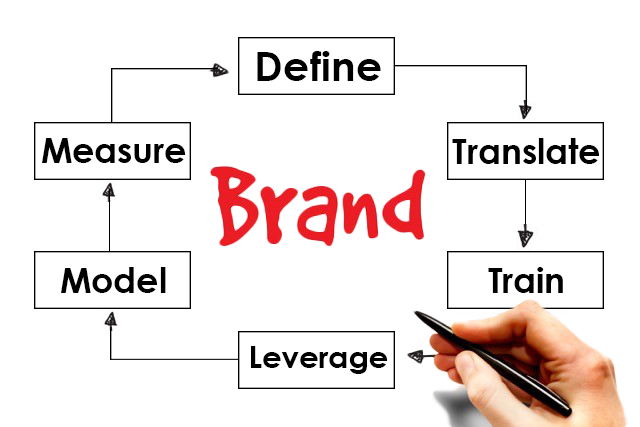
Here are six steps you can take to ensure that your field service representatives deliver your brand promise.

1. Define – Define your brand

By clearly articulating your brand and your brand promise, you can set the foundation to guide your technicians’ actions so that they are consistent with your brand promise.  Start by answering these three questions:

  • How do you want others to think about you?
  • How do you want others to feel about you?
  • What do you want others to say about you?

For example, a service organization that wishes to build their brand promise around the proactive efforts of their field service team may define their brand as follows:

  • How we want others to think about us:Our service provider does more than simply keeping our equipment/facilities/processes running well, they take steps to help us achieve our business goals.”
  • How we want others to feel about us: “We feel assured / We are in good hands”
  • What we want other to say about us: We are better off for having engaged our service provider.”

2. Translate – Translate the brand into actions

Having a brand promise is not enough.  We must translate that promise into action.  What specifically do we expect our field service team to do to?  How do we want our team to conduct themselves in order to communicate and reinforce our brand?

In our example above, one of the actions we would define for our field service technicians are what steps to take to identify and recommend opportunities that will help the customer. One large waste management firm who positions itself as an integral part of the community which they serve, teaches their drivers to be courteous and helpful to their “neighbours” as they go about their routes.  They also train their drivers to look for and report any suspicious activity they see along their routes in an effort to prevent crime.

3. Train – Ensure your team has the skills to execute on the brand

F. Fournes, in his book Coaching for Improving Work Performance noted that the most significant reasons why employees don’t do what they are supposed to do are because they don’t know what to do or they don’t know how to do it. Once we have clearly defined the actions, it is important that we ensure that our team has the knowledge and the skills to execute them.

4. Leverage – Use technology and processes to support your brand

We need to evaluate the technology, tools and processes that we have at our disposal to determine how we can utilize them to support the efforts of our field service team.  For example, how can the hand-held devices be used to help keep the field professional focused on delivering on the brand?  What processes need to be modified to facilitate our field service professionals’ actions.

5. Model – Model the behaviour you would like to see

What we say and how we act are important indicators of how serious we are about the initiative.  We must take care that our words and deeds are consistent with the brand promise.  Our team will pick up on our behaviours and match them accordingly.

6. Measure – Measure

If we don’t measure how well we are delivering on our brand promise, how can we possibly know if we are successful, let alone have the information to allow us to continually improve?  This measurement is more than simply asking if the customer is satisfied or if they would recommend us to others, but delves into how well we have met the promise that we made through our brand.  For example, you might ask, “How well did we … [insert brand promise here]?”

As always, I welcome your comments and questions. You can connect with me via telephone or email or leave a comment right here on the site. And as always, please feel free to leave a link back to your own blog if you have one via the commentluv feature here on the site. If you are reading this blog post via email, you will need to locate this post on my website by clicking here. Scroll down to the bottom of the page where you will find the comment section.

Jim Baston

“Be the change that you want to see in the world.”

– M. Ghandi