Tag Archive for: customer service expert

Service Technician Training ExpertBusiness development by service technicians is often regarded by management as a tactic to be employed to build new business, rather than a differentiating business strategy to impart a superior service experience. Below are 4 questions to ask yourself to determine which approach your organization employs.

When service firms think of business development as a tactic they to tend focus on short-term activities that may achieve immediate gain at the expense of long-term growth. A tactical approach focuses on the question: “How can I get my service technicians to be more assertive in promoting our products and services to our customers?” The downside of the tactical focus is that short term tactical thinking can sometimes lead us to think of how the customer can serve our needs rather than how we can serve the needs of our customer. We may look at the opportunity in terms of “… let’s leverage our customer relationships to win more business.” In addition, a short term, tactical approach may obscure much larger opportunities to truly build a differentiated service offering. Read more

Jim Baston - Proactive ServiceService managers often ask me if they should attend our Proactive Service® workshop with their technicians. My answer is always “yes” and I explain ways to get the most out of training their service tech team. Although I am enthusiastic about the manager attending, this is a somewhat qualified response because these benefits of attending can be outweighed by how the manager acts during the workshop itself. Too often, I find the manager in the back corner of the room, huddled over their laptop or frantically texting someone on their phone. Frequently they will leave the room for long periods of time. To me, this is a lost opportunity and can actually have a negative impact on the training. Here are the 6 ways to participate effectively and get the most return for your training investment: Read more

customer service expert

“You said ‘two’.” These were the three simple words she spoke to me and they set the tone for our business relationship and a lasting first impression. As I write this, it is early on a Sunday morning in Vancouver. I am staying at a downtown hotel and reviewing the details of a workshop that I am delivering to a group of technicians on Monday. I had decided to take a break and walk a couple of blocks to get some fresh air and cup of coffee.

One of the topics of discussion at the workshop will be the power of first impressions and how they can set the tone for a business relationship. When meeting customers for the first time, a poor first impression can greatly hamper our technician’s ability to build trust and negatively impact their ongoing relationship. That is because, once an impression is made, we begin to filter the information we receive about the person who made the impression to fit our view. And, it works for both positive and negative first impressions. For example, if a customer’s first impression is that we are lazy, they will filter their observations about us and pick up on any evidence that may reinforce that view and ignore evidence to the contrary. For example, they may come across us taking a well-deserved coffee break and chatting with one of their employees. If they are of the impression that we are lazy, then they may think, “There he goes again, taking another break! And now they are wasting the time of one of our employees as well!” If we are perceived as hard working by another customer and they were to observe the same situation, they might think, “Finally, she’s taking a break. And look how well she gets along with our staff”. Read more

click image to enlarge

click image to enlarge

Through the years working with Service providers across several industries, I have found that there are 5 common mistakes that service companies make when asking technicians to promote their services. These mistakes can cost the service company in lost revenues, reduced customer retention and higher technician turnover.

Engaging technicians in promoting services is a focus of many service organizations today – and for good reason. A program of this nature can be a significant differentiator in a highly competitive environment. Technicians who use their expertise and knowledge to recommend products and services that help their customers achieve their goals provide tremendous value. They help their customers recognize that they are better off for having known them. And, a customer who recognizes this value in the relationship is very unlikely to take their business elsewhere. Read more

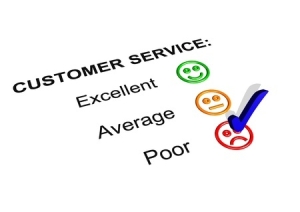
How to rate Customer ServiceHow is your business really doing was the subject of my last blog. In the article, I discussed the challenge of determining if your service technicians are really delivering a Proactive Service® experience by bringing ideas to your customers that will help them be better off. If you recall, I suggested that you consider two questions to ask your customers:

1. “Do our technicians bring you ideas that help you operate more effectively?”
2. “Do you feel that you are better off for having known us?”

If you are interested in tracking your progress over time or compare branch operations for these questions, for example, I would like to suggest a scoring key that will help you. In his article in the Harvard Business Review, “The One Number You Need to Grow”¹ , Frederick Reichheld introduces us to his research into the one question that he found was a good predictor of customer loyalty and growth. The question was “How likely would you recommend [company X] to a friend or colleague?”  He introduces a scoring key that provides a “net promoter” score.   The “net promoter” component comes from the fact that Reichheld’s scoring key considers not only the percentage of responders who rated the company highly (promoters) and who would likely promote the company (i.e. recommend to friends and colleagues), but also the percentage of responders who would rate the company poorly and likely speak negatively about their experience (detractors). By subtracting the percentage of “detractors” from the percentage of “promoters”, Reichheld ends up with a “net promoter score” that can be compared from branch to branch, period to period, etc. Read more

technican training expertWhenever I speak on the subject of Proactive Service® , invariably someone will ask me how do we really know how we are doing? I mention that there are several measures to consider. Higher sales and revenues, increased customer satisfaction and improved levels of customer retention are just a few to consider. However, if you really want to know how you are doing, here are 2 questions to ask your customers through your surveys and during face-to-face visits:

  1. Do our technicians bring you ideas that will help you operate more effectively?
  2. Do you feel that you are better off for having known us?

The first question, “Do our technicians bring you ideas that will help you operate more effectively?”, goes to the heart of Proactive Service® – engaging our technicians in proactive business development. The idea is to ensure our technicians recognize that service is more than simply fixing things. Service also includes ensuring that our technicians use their experience and expertise to look for opportunities to help their customers and take the initiative to discuss their ideas with them. The response to this question will give you insight into what is really happening in the field. Read more

Empathy“I’ll know it when I see it” is a phrase often used to describe a thing or situation which is typically subjective in nature and cannot be clearly defined.  However, when it comes to empathy perhaps a better way to describe it is “I’ll know it when I feel it”.

In our workshops we talk a lot about empathy and in fact, it is hard to define.  Empathy is not what we do so much as how it is reflected (or not) in what we do.  As a result, empathy really can’t be seen, but it can be felt.  And, interestingly enough, it is most often felt in the smallest, most common of actions.

I was reminded of the importance of small things that reflect empathy just last week and how it can make such an important difference.  I was at my mother’s house when the HVAC technician arrived to check the air conditioning system before the weather got too hot.   I answered the door to a bright, clean and friendly young man with a warm smile.  Here are four little things that he did during the course of his work that demonstrated that he had empathy.

Warm greeting with a smile.  “Good morning Mrs. Baston.  My name is Eric and I am with ABC Mechanical.  I have come to complete the spring start-up of your air conditioning system.  May I come in?”.

Taking time to understand the customer’s situation.  Before he got to work he asked my mother if she had had any questions about the heating or cooling.  Did everything seem to be working okay?  Any problems?, etc.  He then explained that he would like to start with the programmable thermostat.  He asked if she had any questions about the programming.

Keeping the customer informed.  Eric explained exactly what he was going to do.  Firstly he would check things out downstairs.  When that was done, he explained that he would be going to inspect and clean the air conditioner itself.

Explaining the work that was done.  When completed Eric explained exactly what he had done and went over the checklist while confirming understanding.  He explained that he had found something about the furnace that needed attention and would be putting in a work order for a part to be replaced.  He explained that my mother would be receiving a call in the next few days to schedule the part’s replacement.  “No charge Mrs. Baston.  It’s all under warranty.”  Again, he asked my mother if she had any questions.

Being in the customer service business, I couldn’t help but ask if his company did any customer service training.  “All the time”, he said.  “We talk about customer service constantly.  We take it very seriously and measure our performance.  You know, I always score at the top”, he said proudly.  No kidding, I thought.

So here it was, as fine an example of empathy as one is likely to feel.  Eric did nothing fancy, nothing special, just simple actions that showed that he really did care.  “I’ll know it when I feel it”.  I certainly felt it that warm day in June.

I’d love your feedback on this. And as always, please feel free to leave a link back to your own blog if you have one via the commentluv feature here on the site. If you are reading this blog post via email, you will need to locate this post on my website by clicking here. Scroll down to the bottom of the page where you will find the comment section.

Jim

From caring comes courage.

Lao Tzu

customer service expert Jim BastonThere is a difference between losing a sale and losing a customer and I experienced it first-hand this week.  In this case, I became the “lost” customer.

My car is getting a bit long in the tooth.  It’s a 2008 and, with over 230,000 kilometers on the clock, it really is time to trade it in.  So it was a happy coincidence that I got a call from the salesperson at the dealership where I purchased this car to tell me about a great deal on the same model I currently own.  I knew that 2013 was the last model year this particular vehicle was made and I was delighted that there were still four available.  I took the car for a test drive while the dealership inspected my car.  When we returned, the salesperson offered me an opening price for the trade-in.  The price was very low and I explained that I just could not see my way to make a deal.  I thanked him for thinking of me and we shook hands.

I got a call on my cell about two minutes later from the salesperson.  “Good news!” he said.  It turns out that they could increase the offer by over 27%!  Over the next few days we negotiated a deal that would be “acceptable to the sales manager”.   We finally agreed on a number – about 43% more than the original offer for my trade-in.  The sales manager accepted it.  We had a deal – or so I thought.

In fact there was really no deal and that was where the problem lies.  “All you need to do now is come in and sign the papers and give us a deposit and the car is yours”, the salesperson said and I arranged to come up that morning.  “Everything will be ready.  We won’t keep you long.”  In fact, everything was not ready.  There was more to it than just signing the papers.  Before making good on their part of the agreement, the sales manager insisted on taking “one last look at my car”.  So the deal, unbeknownst to me, was conditional on a second inspection of my vehicle.

I am sure you can guess what happened next.  The sales manager inspected my car, returned to his office, and had a quick word with the salesperson, who, was sent out to tell me that they could not honour the offer that they had agreed to just 30 minutes before.  I wasn’t very happy and a little upset that I was not told that our agreement was conditional.  I felt that my time was wasted and I expressed my disappointment to the salesperson and that I thought they had acted very unprofessionally.  It occurred to me that this is the type of activity that gives car salespeople such a bad name.

In their zeal to make the sale, they lost sight of the customer – a customer who has been with this dealership since 2008.  They could (and should) have been honest with me during the negotiation. Had they been up front with me that the deal we negotiated was conditional on a second inspection, or had they made it clear that their original offer was the best that they would be able to do instead of putting me through a “mock” negotiation that they wouldn’t honour, then I would have little cause for complaint.  In either case, I may not have ultimately purchased this car, but they would have kept a customer.  Sadly, they have lost both.

This incident brought to focus the difference between losing a sale and losing a customer.  Sometimes we get so focused on the prize, that we will rationalize any means to get there.  Questionable tactics may win the sale on occasion, but the risks are high.  If caught we will not only lose the sale, but also the customer.  And that lost customer is bound to tell others about the experience.

Professional business people realize that it is better to be up-front with the customer even if it means that they are unable to come to an agreement.  When approached this way, the business person may not win the immediate sale, but their integrity will likely win their respect and retain the customer and the opportunity to serve them in the future.

I’d love your feedback on this. And as always, please feel free to leave a link back to your own blog if you have one via the commentluv feature here on the site. If you are reading this blog post via email, you will need to locate this post on my website by clicking here. Scroll down to the bottom of the page where you will find the comment section.

Jim

“The secret of life is honesty and fair dealing. If you can fake that, you’ve got it made.”

– Groucho Marx

 

broken promises in businessDon’t make promises you can’t keep was one of the common maxims in our household when I was growing up.  Wise advice. I was reminded of the importance of this message just last week and that sometimes, it is better to turn business away rather than disappoint.  Have you found that you sometimes take on work or make commitments for which you have a low likelihood of fulfilling?

While visiting family in the UK, we decided to take a brief break in a part of the country we had not been before.  We headed for Cambridge and the wonderful colleges and booked a small inn in a village not far from the city.  It was an old stone building that had recently been converted.  We found it on the internet and were impressed with the descriptions previous patrons had written about it.  Quaint, attentive, old-world character, friendly staff.  Perfect.

We drove out to Cambridge full of anticipation and, by early evening, we found this small, quaint “post card” inn situated on the quiet main street of the village.  There was a newly constructed glassed-in dining area at the back and a large parking lot which was almost full.  Must be a popular spot!  As we walked past the dining room to the entrance, we noticed that it too was full.  It turns out that there was a wedding that evening.

Check-in was friendly but not exceptional.  The room was small, clean and functional.  It overlooked the glassed-in dining area – we could look down and see the wedding party having dinner.  We went out to dinner ourselves.  We returned about 9:30, both tired and ready for bed.  However, sleep was not to come easy.

By the time we returned, the wedding was in full swing.  The music was loud – very loud.  Too loud!  Our little room literally shock to the beat.  We called the front desk to ask for another room and were informed that they were fully booked.  There was nothing else available.  We were stuck.  The music continued until almost midnight.  We decided to grin and bear it.

At check out we expressed our disappointment.  We explained that we had expected a quiet, relaxing stay as promised on their website but we experienced just the opposite.  We felt that we should have been told about the wedding at the time of booking and advised about the noise problem associated with the room we were given.  We then could have made an informed decision about whether to stay there.  The inn should have been prepared to turn us away but instead chose to fall terribly short on their promise.  Instead of more raving fans, they created raving detractors.  We certainly won’t recommend this place and will avoid it on any future visit.

I think the lesson has direct applicability to the service business and yes we sometimes take on work or make commitments for which we have a low likelihood of fulfilling.  Usually the commitments come with the best of intentions and are often made in the heat of the moment.  Sometimes we think we are doing it simply because we don’t want to let the customer down.  Regardless of the intentions, whenever we make promises we can’t keep, it ends in the same result.  Disappointed customers and possibly raving detractors.

I’d love your feedback on this. And as always, please feel free to leave a link back to your own blog if you have one via the commentluv feature here on the site. If you are reading this blog post via email, you will need to locate this post on my website by clicking here. Scroll down to the bottom of the page where you will find the comment section.

Jim

“Life is like photography, we develop from the negatives.”

-Unknown

Customer service expertIn our programs, we dedicate a portion of our time to presenting an effective technique for taking the stress out of challenging situations.  We discuss the impact of stress in emotional situations and the important role that we play as technicians to reduce it.  The power of this technique was brought home to me last week.


On a trip to western Canada, I had the dubious pleasure of having my email hacked by someone who gets their kicks out of making the lives of others miserable.  It started about 6 AM with a couple of “Undelivered Mail Returned to Sender…” email messages and suddenly it turned into a torrent.  My smart phone would not stop vibrating as message after messaged jammed my inbox.  And then, after about 10 minutes, it stopped.  Phew, I thought.  That must have been a glitch somewhere.  Just as my blood pressure was returning to normal, it started again and this time it did not stop.

Read more